For thirty years I baked on Saturdays and blamed myself when things went wrong. Same recipe, same oven, same pan, and one week the sandwich bread rose like a dream and the next it sat there like a brick. I figured it was my hands, or the weather, or some mystery that came with age. Then a friend who runs a small bakery watched me dig a measuring cup into the flour bag and said, kindly, that I was packing it. That was the week I bought an Etekcity digital scale, mostly to prove her wrong. I have not used a dry measuring cup since.
That is not a dramatic story, and I am not going to pretend a scale made me a pastry chef. It did one thing for me: it made my recipes repeatable. If a loaf works, I can make that loaf again, and again, until I am thoroughly bored of it. If it fails, I can look at the numbers and find out why instead of guessing. Here are ten reasons I stopped measuring by volume, roughly in the order they occurred to me.
The scale that ended my Saturday guessing
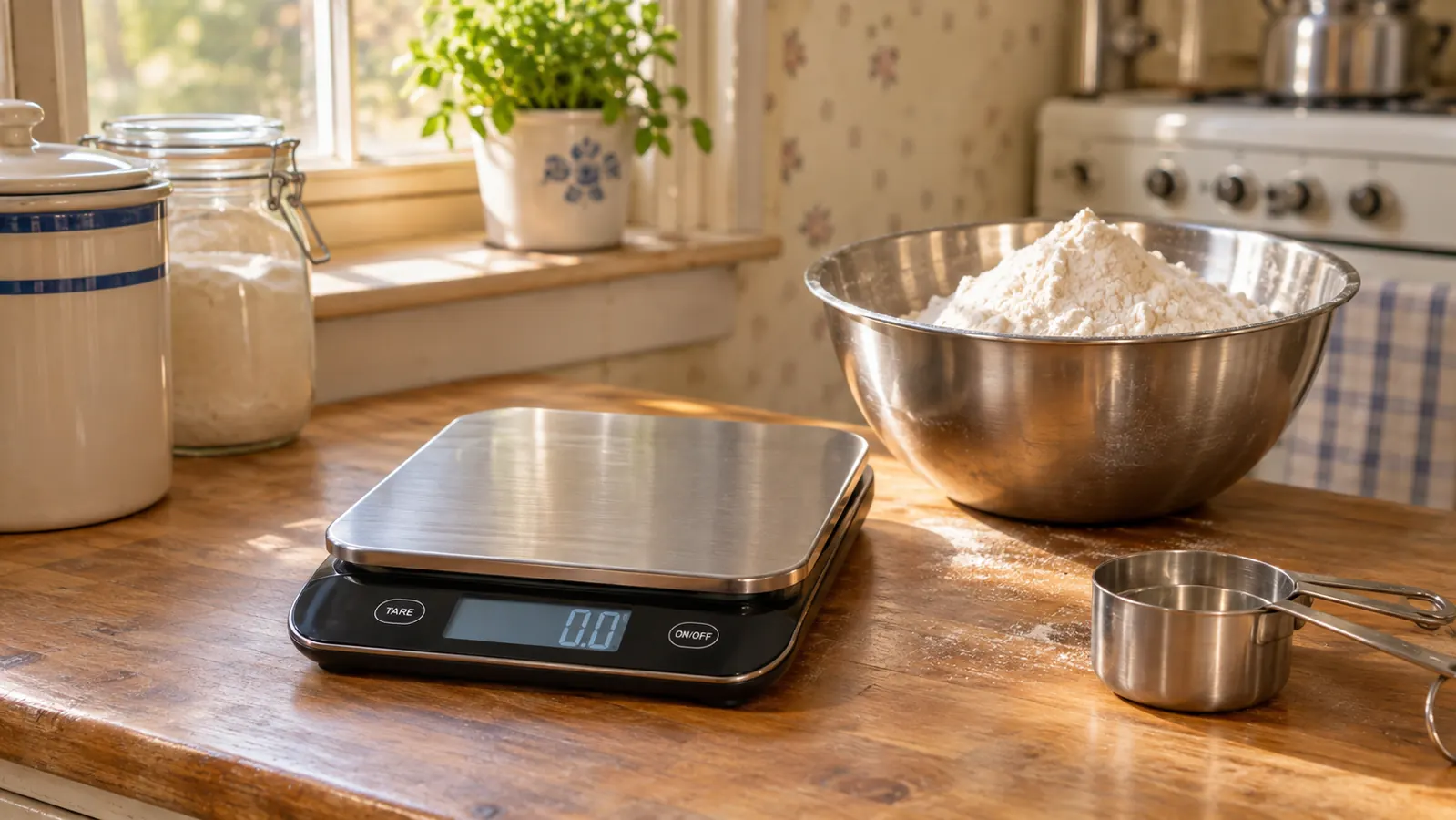
Eleven pounds of capacity, one gram increments, and a tare button that does the only job I actually need it to do. My Etekcity has lived in the drawer by the flour for two years.
Amazon Check Today's Price on Amazon →Turns four measuring cups into one bowl
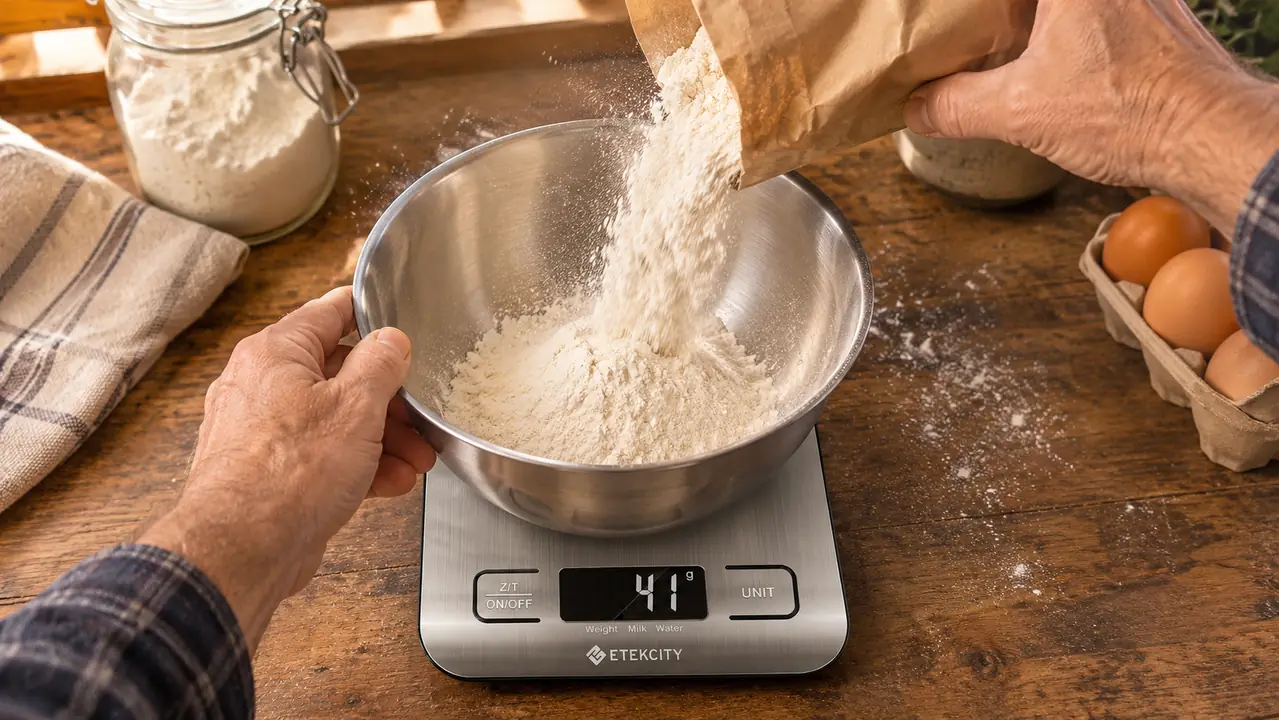
A layer cake used to leave me with a cup for flour, a cup for sugar, a cup for cocoa, a spoon for salt, and a sink full of dishes before the mixer ever started. Now I set my bowl on the scale, press tare to zero it out, add the flour, zero again, add the sugar, zero again. One bowl, one scale, one number at a time. The tare function is the whole trick, and it takes about a second to learn.
A gram is a gram in July and in January
Flour drinks the air. A cup scooped in a humid Lancaster August can weigh a good deal more than the same cup in a dry February kitchen, and I never once adjusted a recipe for it. Grams do not do that. If the recipe says 400 grams of flour, I put in 400 grams of flour, whether the windows are open or the heat is running. That is the entire argument, and it took me thirty years to hear it.
You find out how much your flour actually scoops
I measured the way my mother taught me, dipping the cup into the bag and leveling it with a knife. When I finally weighed that cup, it came in near 140 grams. The recipe was written for about 120. I had been adding an extra fifth of a cup of flour to every loaf for three decades and calling it bad luck. If you own a scale and do nothing else with it, weigh one cup of your own flour once. It is a genuinely useful piece of information about your kitchen.
Halving a recipe stops being an arithmetic problem
Try halving three quarters of a teaspoon of baking soda with measuring spoons and see how confident you feel about it. Now halve four grams and get two. The scale does not care about fractions and it does not care that the recipe was written for a crowd. I halve and double things constantly now, and I have stopped penciling conversions on the backs of my recipe cards because I no longer need them.
Mistakes show up before they bake
When I add flour to a dough by hand, I can feel it stiffen, but by then I have usually gone too far and there is no polite way back. Weighing means I know exactly how much went in, and the bowl tells me the truth well before the oven does. The first time I caught a short measure of water before it turned into a dry loaf, I felt like someone had handed me a small and very practical gift. That was month one with the Etekcity, and it is still the reason I keep it out.
A cup of flour can weigh anywhere from about 120 grams to 150 depending on how you scoop it. That is not a rounding error. That is a different recipe.
Bread gets repeatable, which is all I ever wanted
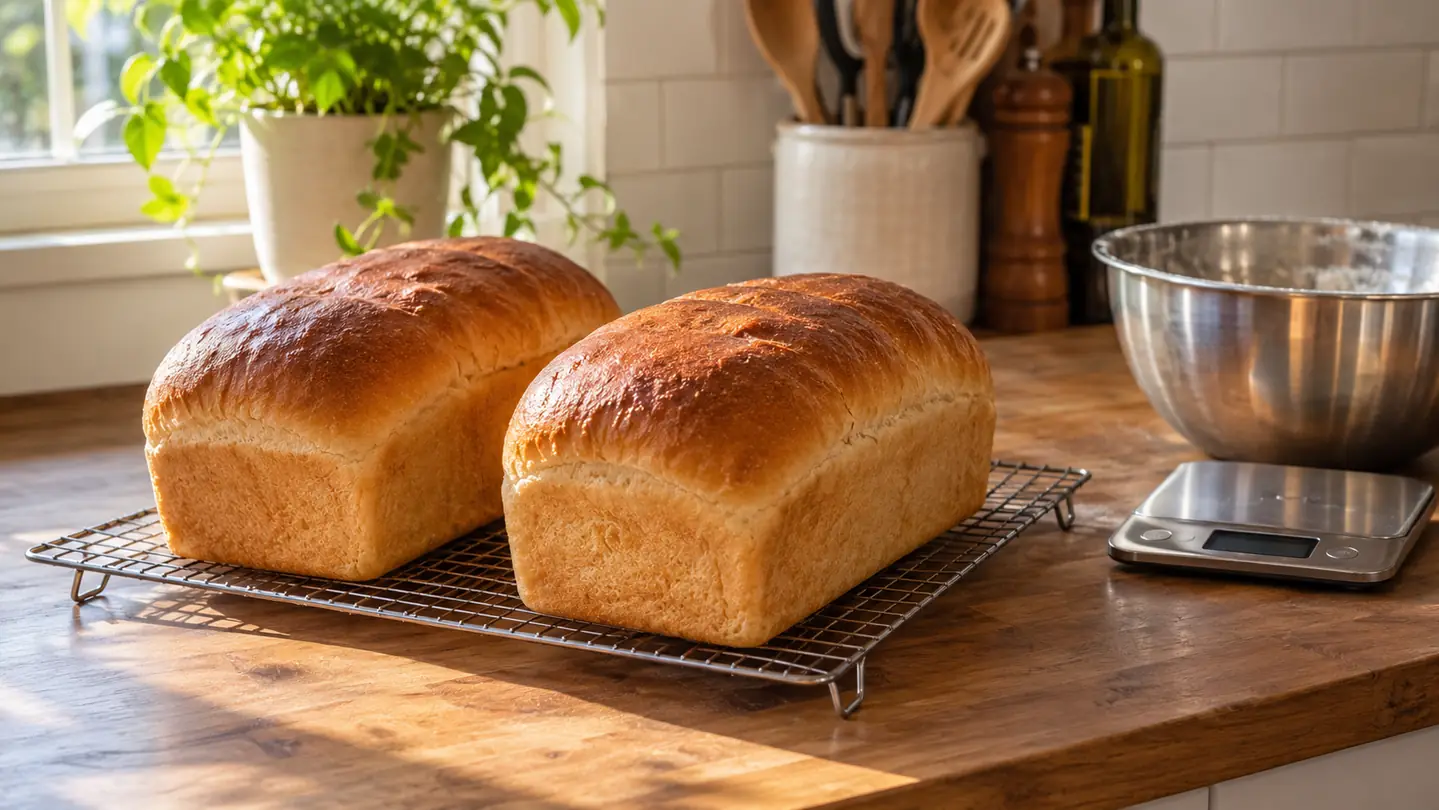
I am not a sourdough person and I am not going to pretend to be one. But once I started writing grams instead of cups on my bread card, my sandwich loaf stopped being a coin flip. Same flour, same water, same salt, same yeast, same numbers. Twelve Saturdays in a row it came out the same. Twelve. I have never had a run like that measuring by volume, and it was not because I suddenly got better. It was because I stopped changing the recipe by accident.
It reads in whatever units the recipe uses
The scale measures in ounces, pounds and ounces, fluid ounces, grams, and milliliters, which matters more than it sounds when your recipe collection spans four decades. My oldest cards are in ounces, my bread book is in grams, and one church cookbook entry measures liquid in milliliters. One tool covers all of it, and I am not converting anything in my head at seven in the morning before coffee.
It takes up almost no room in a small kitchen
My kitchen was built in 1953 and counter space is a rumor. The Etekcity scale is small and light, and it stores in the drawer with the potholders when I am not using it. I do not have to clear a section of counter to weigh out flour. In a normal kitchen that will sound trivial. In mine, it is the difference between a tool I reach for every week and one that lives forgotten in a cupboard behind the cake pans.
It wipes clean instead of soaking
Flour gets everywhere, and dried dough in the ridges of a plastic cup is one of the small miseries of baking. The weighing platform is stainless steel, so I take a damp cloth, wipe it down, and it is finished. There is one flat surface and it cleans in about four seconds. I have scrubbed enough measuring cups in my life to appreciate that more than I expected to.
You can read it without your reading glasses
The display is backlit and the numbers are large. There are two things I do before coffee: I weigh flour, and I do not put on my glasses. The first time I used it I was startled to be able to read 240 from arm's length across the counter. It runs on two AAA batteries, they came in the box, and I have not had to think about them since.
What I'd Skip
What I would skip is the idea that a scale fixes everything, because it does not. It will not correct an oven that runs hot, and mine runs about fifteen degrees hot, which is a separate problem with a separate solution. It will not make a cheap pan bake evenly. And the readout is in one gram increments, which is fine for flour and sugar but not fine for the small stuff: three grams of yeast is about as precise as you can honestly get, so I still use a measuring spoon for anything under five grams. The Etekcity makes your measurements repeatable. It does not make your oven honest and it does not make you a pastry chef. What it did for me was take the guesswork out of the one part of baking I could actually control, and after thirty years that turned out to be enough.
If your baking is uneven, weigh one batch and see
You probably do not need a new oven or better flour. You need to know that 400 grams went in as 400 grams. Pick one recipe you make often and weigh it once. The Etekcity scale is the cheapest way I know to find out what your own kitchen has been doing.
Amazon Check Today's Price on Amazon →