
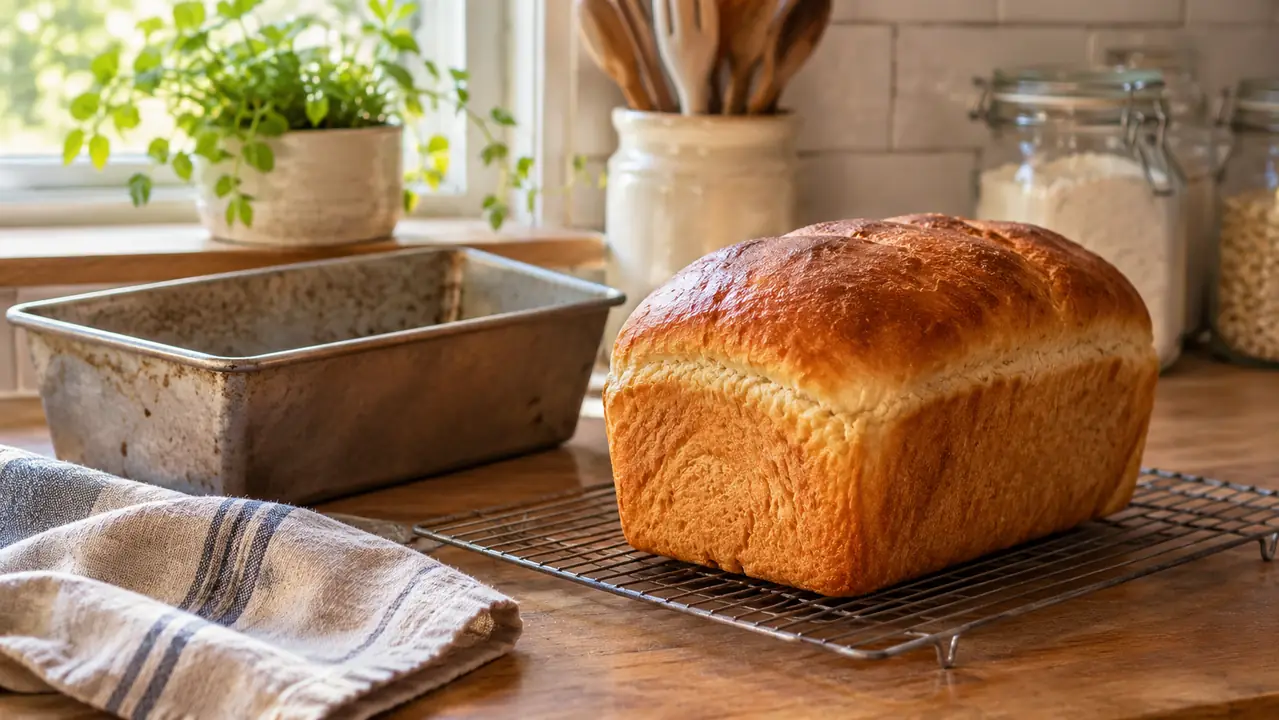
My first loaf pan was a thin thing I bought at a hardware store in 1994, and for about twenty years I blamed myself for the pale bottom and the torn corner on every banana bread that came out of it. It was not me. It was the pan. These days I bake most weekends in a small 1950s kitchen with a gas oven that runs about fifteen degrees hot, and the pan I reach for is the USA Pan aluminized steel loaf pan. Not because it is fancy. Because it does three unglamorous things well: it heats evenly, it releases clean, and it does not warp.
Below are ten reasons I keep coming back to it, roughly in the order they matter to me on a Saturday morning. Most are about the pan. At least one is about what a pan cannot do for you, because I would rather you know that going in than find out from a sunken loaf.
The pan I stopped thinking about somewhere around year two
Ten inches by five by three. Holds 1.5 pounds of dough or batter. It is the one piece of bakeware I have never once wanted to replace.
Amazon Check Today's Price on Amazon →The corrugated base moves air under the loaf
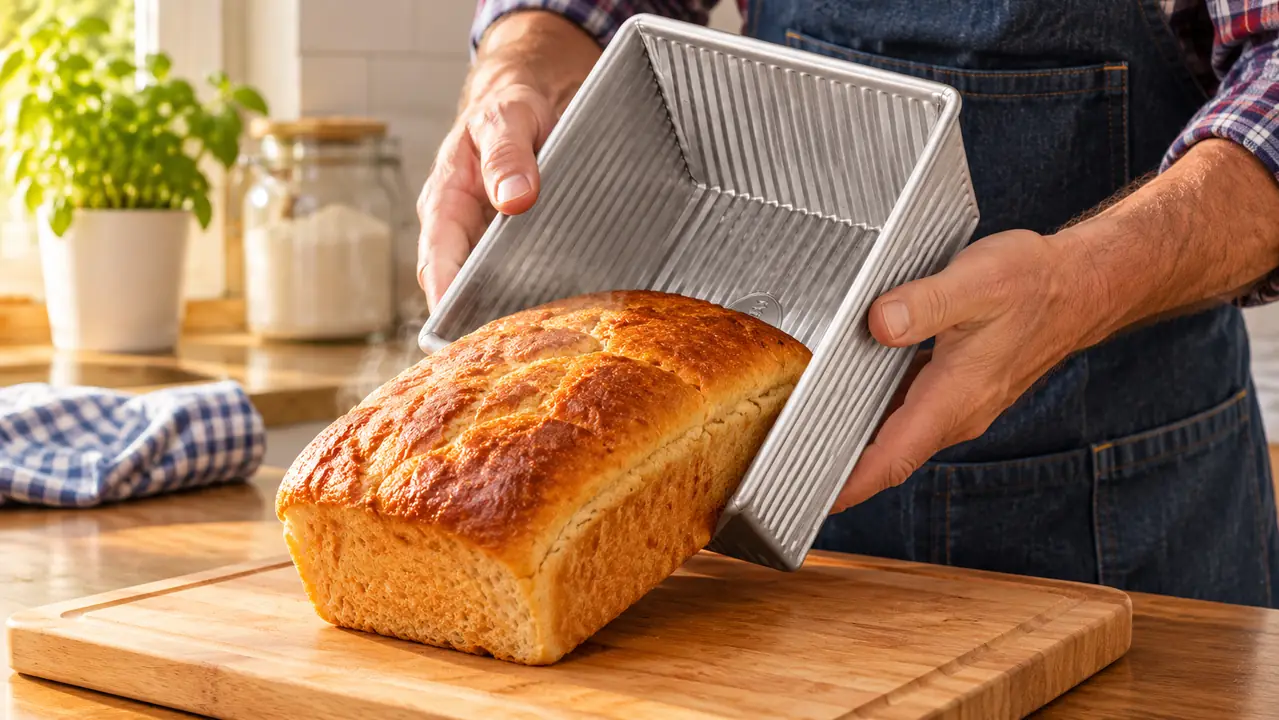
The bottom of this USA Pan loaf pan is not flat. It has a corrugated surface, a set of shallow ridges running its length, and the maker says the design facilitates air circulation for evenly baked goods and quick release. What that means at the counter is a bottom crust that browns at the same rate as the top. My old flat pan gave me a pale, damp bottom and a dark top on the same loaf, and for years I assumed my oven was the problem.
Aluminized steel holds heat when you open the oven door
Aluminized steel is a mix of steel for strength and durability with aluminum for heat conductivity, which is the whole reason this pan behaves the way it does. My gas oven cycles and runs hot, and every time I open the door to rotate a pan, a thin one drops temperature and has to climb back. This one holds what it has. The loaf sets on schedule instead of slumping in the middle while the oven recovers.
A 1.5 pound capacity is an actual sandwich loaf
The pan measures 10 inches by 5 inches by 3 inches and holds 1.5 pounds, counted as 4 cups by the manufacturer. That is not a decorative size. It is the size my standard white bread recipe fills, with a little headroom to rise and a dome that comes out level instead of climbing over the rim and pooling on the oven floor. If you have been baking sandwich bread in whatever pan came with a set, this is the dimension you were missing.
The silicone nonstick coating saves you the parchment sling
The pan is finished with USA Pan's silicone nonstick coating, and after two years of near weekly use mine still releases a quick bread in one piece. I used to cut a parchment sling for every banana bread, which is fine until you are doing it at six in the morning with a cup of coffee going cold. Now I grease the corners, pour, bake, and turn it out. The loaf drops. Nothing tears. I have not bought a roll of parchment in a year.
At 1.3 pounds it does not buckle
The pan weighs 1.3 pounds and the listing calls it heavy duty, and you can feel the difference the moment you pick it up. Thin pans buckle in a hot oven, and once the bottom bows, the loaf rocks and the corners scorch. Mine has been through two years of weekend baking and the base still sits flat on the counter with no wobble. That is not a thrilling thing to write about. It is the reason the pan is still in my cupboard.
Straight walls give you square, stackable slices
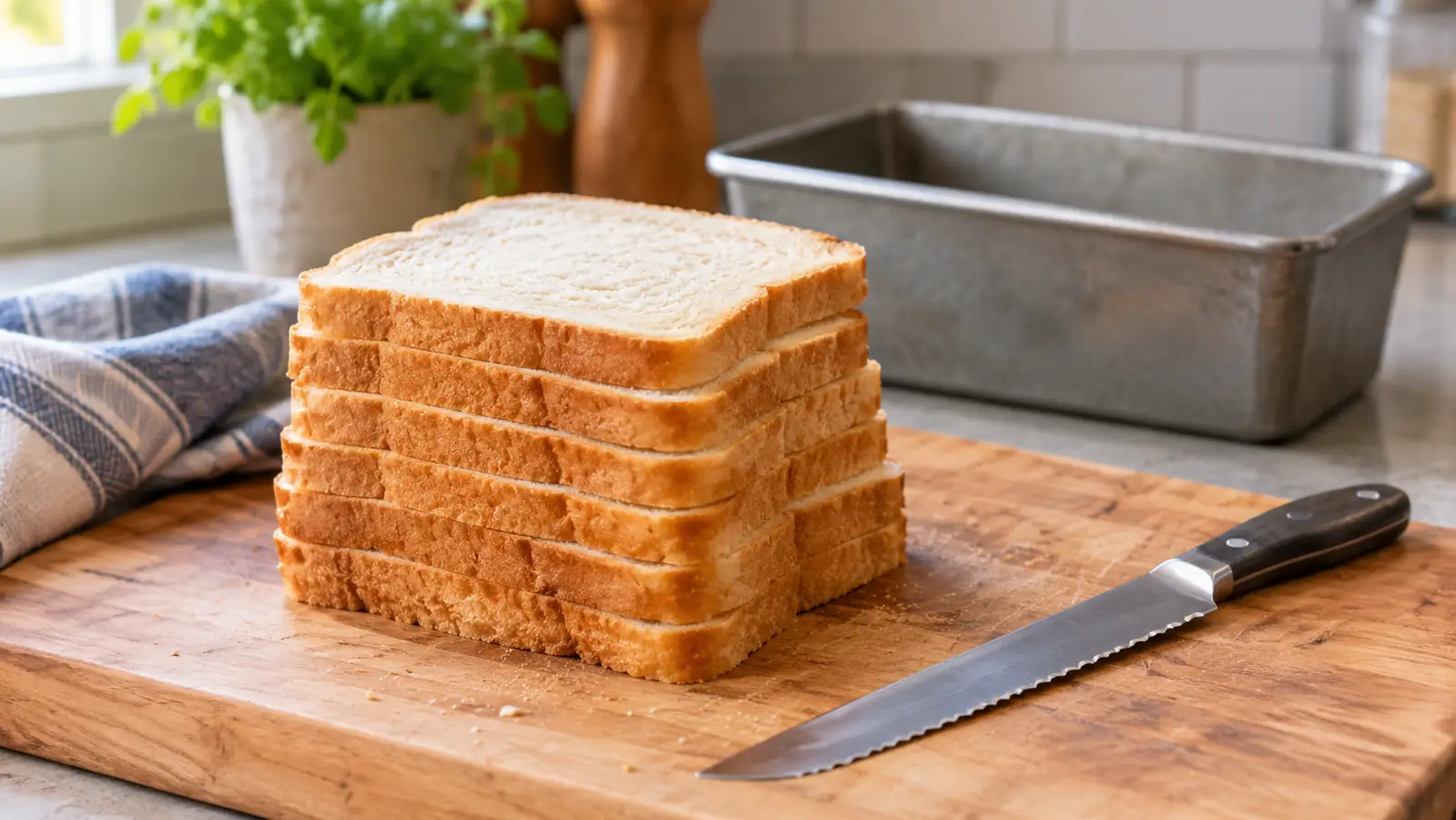
The shape is rectangular with straight sides rather than a flare, so the loaf comes out a consistent width from end to end. Sandwich slices stack. Toast fits the slot. It sounds like a small thing until you have spent years trimming the rounded ends off a loaf baked in a pan that spread as it rose. Dale, my husband, is a retired machinist and therefore notices these things, and he said the slices looked store bought. From him, that is high praise.
Rated to 450 degrees, so a hot oven does not frighten it
The upper temperature rating is 450 degrees Fahrenheit. My oven runs about fifteen degrees hot, so I set it to 335 when a recipe asks for 350, and I have never once worried about what the pan was doing in there. If you bake at high heat, or if your oven has a mind of its own the way mine does, this matters more than how the pan looks on the shelf. It holds, bake after bake, without a warp.
Three inches deep means it actually stores in a small kitchen
My kitchen is a 1950s galley with about four feet of usable counter and one drawer wide enough for pans. This one is 3 inches high, so it tucks under a sheet pan and slides into the drawer without a fight. If you have ever played pan tetris at the end of a long bake, you know the footprint is not a trivial detail. It lives where I can reach it, and that is most of the reason I use it every week.
Hand wash is the one chore, and it takes about a minute
The care instruction is hand wash, and I want you to hear that plainly before you buy anything. In practice it is warm water, a drop of soap, a soft sponge, and thirty seconds of your time. No soaking, no dishwasher. I have owned pans that went in the machine and flaked within two years, so I do not count this as a real loss. I wash it while the loaf cools. By the time I cut the first slice, it is dry in the rack.
A limited lifetime warranty means you buy it once
USA Pan backs this loaf pan with a limited lifetime warranty. I have never had to use it, so I cannot tell you how that phone call goes, but I can tell you what it signals: the company expects the pan to outlast the person holding it. That changes the arithmetic on any bakeware purchase. I am 61 and I do not expect to buy another loaf pan. One of my children will inherit this one and will probably be tired of hearing about it.
The bottom crust now browns at the same rate as the top. That was never my technique. That was the ridges.
What I'd Skip
Two things I would not bother with. First, a second loaf pan in a specialty size, unless you regularly bake for a crowd. The 10 by 5 by 3 pan covers sandwich bread, quick breads, pound cake and meatloaf, and a cupboard full of single use pans is how a small kitchen stops working. Second, I would not buy a glass loaf pan for bread. Glass is fine for a meatloaf you want to watch through the side, but it heats slowly and I have never gotten an even crust out of one. One good metal pan beats three mediocre ones, and that is the whole argument.
If your loaves come out pale on the bottom and torn at the corner, the pan is the first thing to fix
It will not make you a better baker. It will stop costing you loaves while you get better. That was worth it to me.
Amazon Check Today's Price on Amazon →