
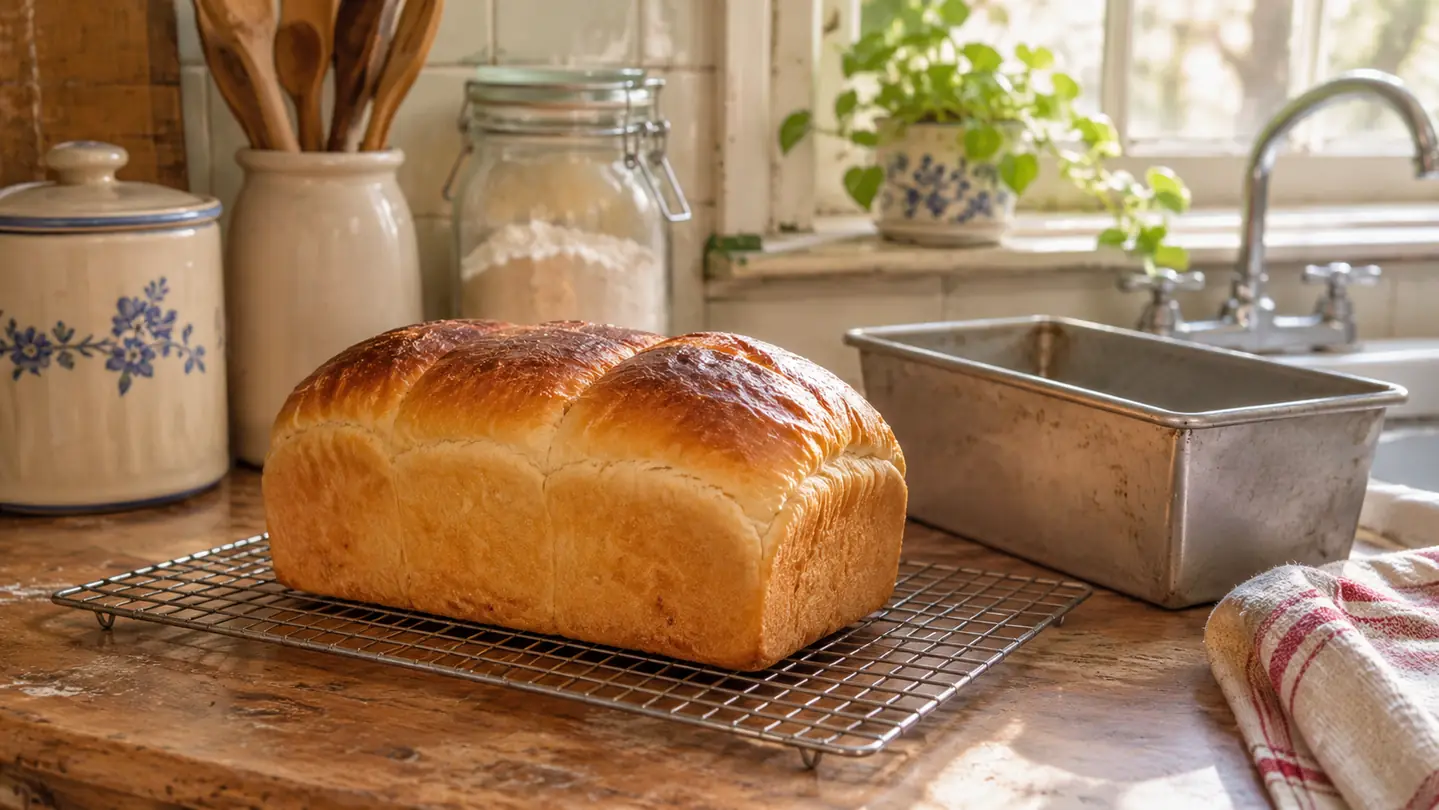
Short answer: if sandwich bread is a weekly habit in your house, the USA Pan aluminized steel loaf pan bakes the better loaf. The base browns evenly across the whole bottom, the crust has a little backbone to it, and the loaf comes free with a shake instead of a knife run around the edges. If you bake one loaf a month and you like to watch it rise through the oven door, a glass loaf pan does the job and goes in the dishwasher. I'm Corinne. I'm 61, retired from a middle-school library, and I bake most weekends in a small 1950s kitchen in Lancaster, Pennsylvania, with a gas oven that runs about 15 degrees hot. I made the same honey whole wheat dough in both pans from the same batch, weighed on the same scale, sitting side by side on the same rack. The differences that showed up were narrower and more specific than the internet suggests. They came down to two things: how the bottom of the loaf browned, and how the loaf let go of the pan.
Here is the shape of it. The USA Pan is 10 inches wide, 5 inches deep and 3 inches tall, holds 1.5 pounds of dough, and weighs 1.3 pounds. It is aluminized steel with a corrugated surface and a silicone nonstick coating, rated to 450 degrees, hand wash only, with a limited lifetime warranty. The pan it is up against is the 1.5 quart tempered glass loaf pan most of us already own, the one that arrived with a casserole dish or a wedding gift and never left. Both fit on the same oven rack. Both hold a standard sandwich loaf. What separates them is not size. It is the way each material moves heat into the bottom of the loaf, and what that does to the slice you eat first, which in my kitchen is always the heel.
| USA Pan Loaf Pan | Glass Loaf Pan | |
|---|---|---|
| Material | Aluminized steel with a corrugated surface and a silicone nonstick coating | Tempered glass with smooth walls |
| Bottom crust | Dark and even across the whole base, edge to edge | Pale in the middle, darker in the two bottom corners |
| Watching the bake | You open the door or you trust the timer | You can see the sides browning through the glass without opening the oven |
| Release | One shake and the loaf drops out, no greasing after the first few bakes | Needs greasing and flour, and the corners still grab |
| Cleaning | Hand wash only, no dishwasher | Straight into the dishwasher |
| Knocks and temperature swings | Steel can dent. It does not shatter | Glass can crack from a cold counter or a wet cloth on a hot pan |
| Footprint and capacity | 10 by 5 by 3 inches, 1.5 pounds of dough | About the same footprint, 1.5 quart |
Where USA Pan Wins
Heat moves through aluminized steel quickly. That is the entire argument, and everything else is a footnote to it. The pan is a mix of steel for strength and aluminum for conductivity, and it comes up to oven temperature fast, so the bottom of the loaf starts setting and browning in the first ten minutes rather than the last twenty. My side by side bake showed it in the least dramatic way possible. Same dough, same rack, same 40 minutes, and the USA Pan loaf came out with a base the color of toast from corner to corner. The glass loaf in the other pan had a pale center and two dark corners, which is what you get when the pan itself is a slow and uneven conductor and the corners are the only place with enough surface contact to really color.
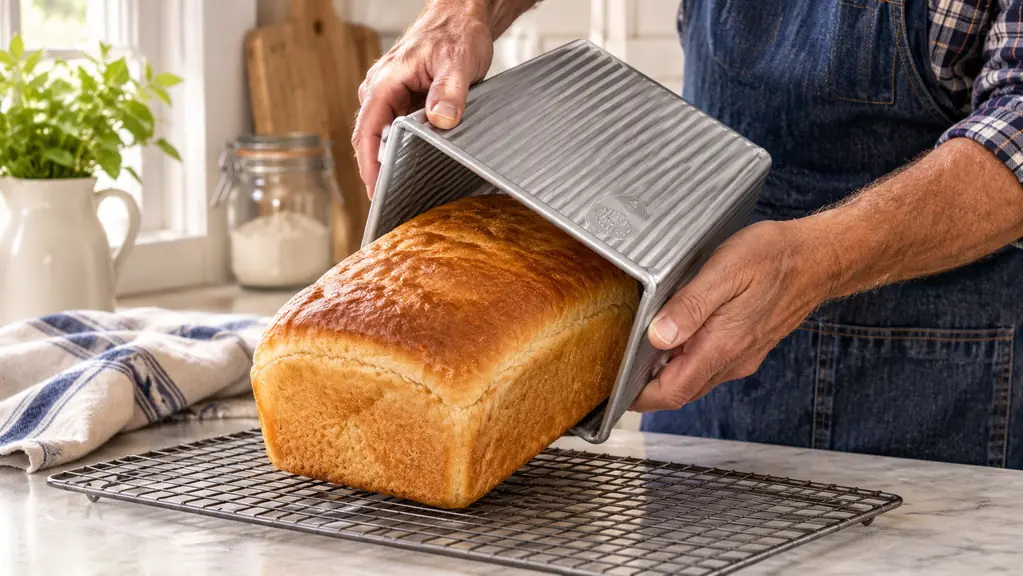
The corrugated surface does a second job beyond looks. Those shallow ridges hold the loaf slightly off the flat of the pan, which lets air circulate and gives the crust a place to release from instead of a smooth wall to cling to. I stopped greasing the USA Pan after the third bake. I turn it over, give it one downward shake, and the loaf lands on the rack with a sound like a book being set down. The same loaf in glass needed a thin spatula run around all four sides, and the corners still came away rough on the first slice. Steel also survives the kind of thing that happens in a small kitchen. I have knocked this pan against the sink edge and dropped it on a tile floor. It dented once, years ago, and it is still baking. I keep a notebook with the bake dates in it, and the entry for the fourth Saturday says 38 minutes and a base that was even all the way to the corners, with no pale ring anywhere. The glass pan's entry from that same morning says 44 minutes and corners dark while the middle of the base was still blond. Two years of Saturdays have not changed my mind about either line.
Where a Glass Loaf Pan Wins
You can see the bake happening, and on a hot oven that is not a small thing. My gas oven runs about 15 degrees hot, so I am always deciding whether to pull a loaf five minutes early. With glass I can crouch down, look through the side, and see how far the browning has climbed before I ever touch the door handle. With the USA Pan I am relying on the timer, the internal temperature, and thirty years of knowing what my oven does. That is a real advantage and I will not pretend otherwise. If you are newer to bread and you want to learn what a loaf looks like as it sets, glass teaches you something steel keeps hidden. There was one morning in November when I had the heat too high and the glass pan told me so at 25 minutes, the sides already a deep brown while the steel pan beside it still looked fine and was quietly overbaking on the bottom. I pulled them both early, but I only knew to pull the glass one because I could see it.
Glass also wins the cleanup argument outright. The USA Pan is hand wash only, which means a soak, a soft sponge, and a careful dry so the coating lasts, and I do that every Saturday whether I feel like it or not. The glass pan goes in the dishwasher and comes out clean. It also costs little to replace if it ever does crack, it does not hold the smell of last week's onion rye, and it is the better pan for the other things a loaf pan gets used for: meatloaf, cranberry quick bread, a small lemon loaf at Christmas. Acidic batters are the one place I actually prefer glass, because there is no coating to think about at all.
Bake one loaf in it and stop guessing about the bottom crust
The USA Pan loaf pan is 10 by 5 by 3 inches, holds 1.5 pounds of dough, and comes out of the oven with a base that browned all the way across. Hand wash it, dry it, put it away, and it is ready for next Saturday.
Amazon Check Today's Price on Amazon →How I Tested Them
I made one batch of honey whole wheat, 900 grams of dough total, and split it into two 450 gram pieces so neither pan got an advantage in size. Both were shaped the same way, seam down, and both went into a cold-proof overnight in the refrigerator so they would hit the oven at the same temperature. My oven was set to 350, which on my thermometer means closer to 365, and I put both pans on the middle rack with two inches between them so the air could move. I rotated the pans front to back at the 25 minute mark, which is standard for my oven and not a favor to either pan. I weighed the dough on a digital scale that reads to the gram and divided it with the same bench scraper, so the two pieces were within five grams of each other. The pans sat side by side on one rack, never one above the other, because anything on the lower rack in my oven browns faster on the bottom no matter what it is made of.
The steel loaf was done at 40 minutes, at 200 degrees internal, with a bottom that sounded hollow when I tapped it. The glass loaf needed five more minutes to reach the same internal temperature and still came out paler on the base. That is the whole test, repeated four weekends in a row with sandwich bread, one banana bread, and one cranberry quick bread. The pattern held every time. The USA Pan ran a few minutes faster and browned darker. The glass pan ran slower and lighter, and was noticeably harder to get out of the pan cleanly when the batter was a soft quick bread rather than a structured yeast dough.
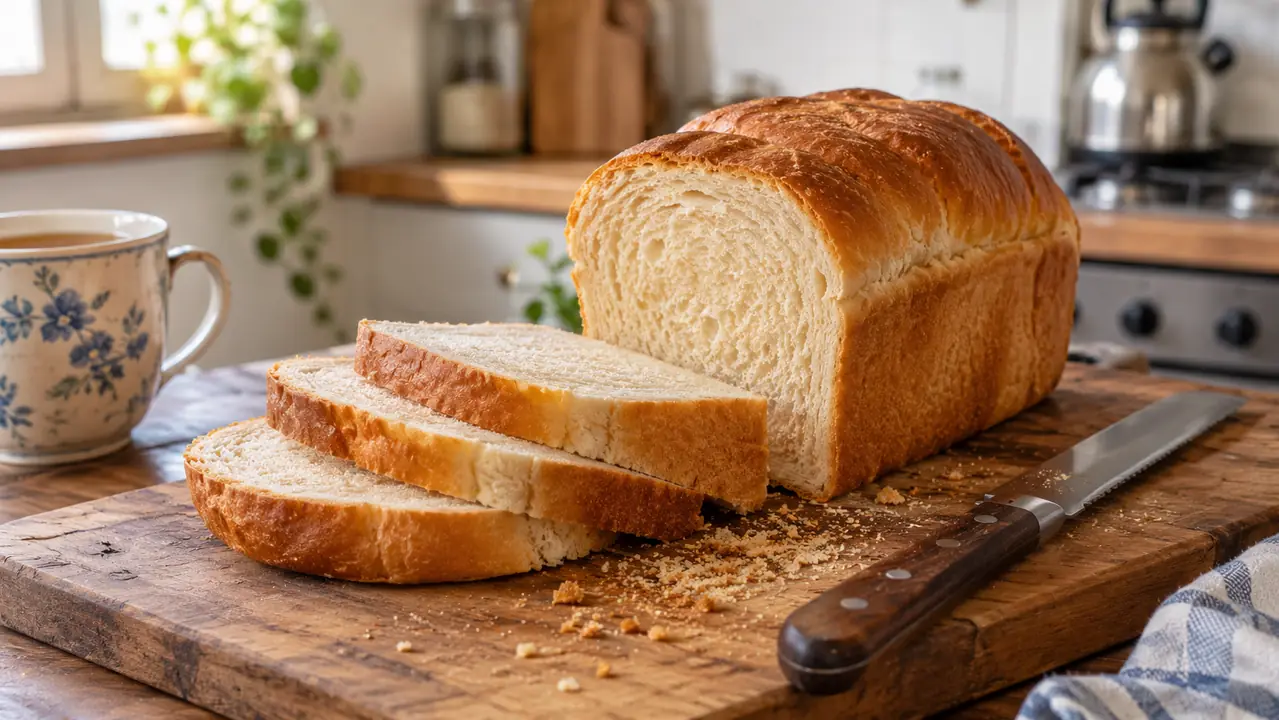
One thing the test did not change: the crumb. Both loaves were equally tender inside and both sliced the same on day two. If you are expecting a pan to fix a dense loaf, it will not. A pan changes the outside of the bread, not the inside. That is a job for your scale and your proofing, which is a lesson I learned the slow way and after a few hundred dollars of gear I did not need.
Same dough, same rack, same 40 minutes. The steel pan's base came out the color of toast. The glass pan's came out the color of a dinner roll.
What a Hot Oven Does to Each Pan
Glass bakeware comes with guidance to drop the oven temperature by 25 degrees, and this is worth taking seriously rather than treating as a suggestion. Glass heats slowly, holds heat, and keeps pushing heat into the loaf after you pull it out. In an oven that already runs hot, that combination means the outside of the bread can set and darken before the middle has finished. I bake the glass loaf at 325 and give it the extra five minutes. With the USA Pan I use the temperature the recipe actually calls for, because the steel responds quickly and evenly and does not keep cooking the crust after the pan leaves the oven.
If you do keep a glass pan, do not set a hot one on a cool stone counter or put it down on a damp towel. That is the failure I hear about most from people who have lost a pan, and it is a thermal shock problem, not a baking problem. I learned that one with a glass casserole dish in 2019 and I have not set glass down on the stone since. The folded towel goes on the counter first now, and the pan goes on the towel. It is a small habit and it has saved me a pan. The USA Pan does not care about any of this. I have set it on the porch rail in January to cool faster and it has never complained. In a small kitchen with limited counter space, that kind of indifference matters more than it sounds. I do not have room for gear that needs to be handled gently.
Who Should Buy Which
Buy the USA Pan if you bake sandwich bread most weekends, if you care what the bottom crust looks like, and if you are tired of greasing and flouring a pan and still losing a corner of the loaf. Buy it if your kids or your husband eat the heels, because the heels are where the difference is loudest. It is also the pan I would hand to someone who is only going to own one loaf pan and wants it to still be in the cupboard in fifteen years. The hand washing is the price of admission and it takes about ninety seconds.
Keep the glass pan if you bake a loaf every few weeks, if you want to watch the color come up through the side, or if the pan is going in the dishwasher or not coming out at all. Keep it for meatloaf and for quick breads, where seeing the sides matters and the batter is forgiving. Most bakers I know end up with both, and that is not a cop out. In a small kitchen, I would give the glass pan the harder storage spot and keep the USA Pan where I can reach it, because it is the one that gets used every Saturday. If you want the longer version of how this pan has held up in my kitchen, I wrote about that separately, and it covers the coating and the dents in more detail than fits here.
The loaf pan that earns its counter space every Saturday
Aluminized steel, 1.5 pounds of dough, 10 by 5 by 3 inches, limited lifetime warranty. Hand wash it and it will outlast the oven it bakes in.
Amazon Check Today's Price on Amazon →