
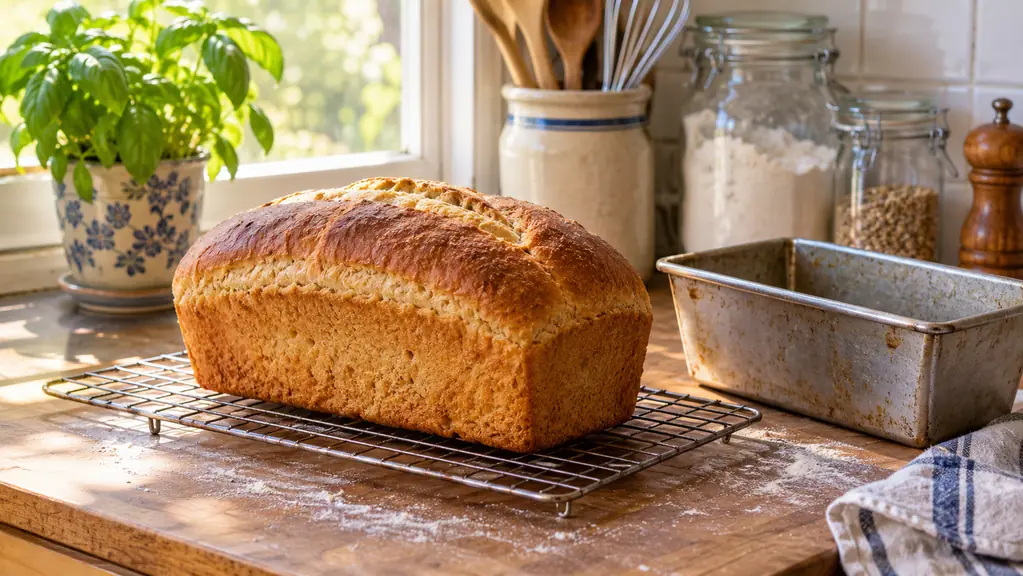
For six years my sandwich bread came out wrong in exactly the same way. Pale across the top, a gummy band through the middle, and a bottom crust so dark it looked like I had switched the oven to broil and gone upstairs. I blamed the oven first. Then the flour. Then myself, which is the oldest habit I have.
Our range is a gas oven from the 1950s that runs about 15 degrees hot. I know that now because I finally hung a thermometer on the middle rack and left it there. For years I did not know, so I proofed longer, moved the rack up and down, set a pan of water on the oven floor, bought a better instant-read, and kept a notebook of every loaf. The notebook is what found the pattern. The bad loaves were always the ones that came out of my old pan, and the old pan had a warp you could feel with a fingertip, a low spot in the center where the metal had buckled under the heat.
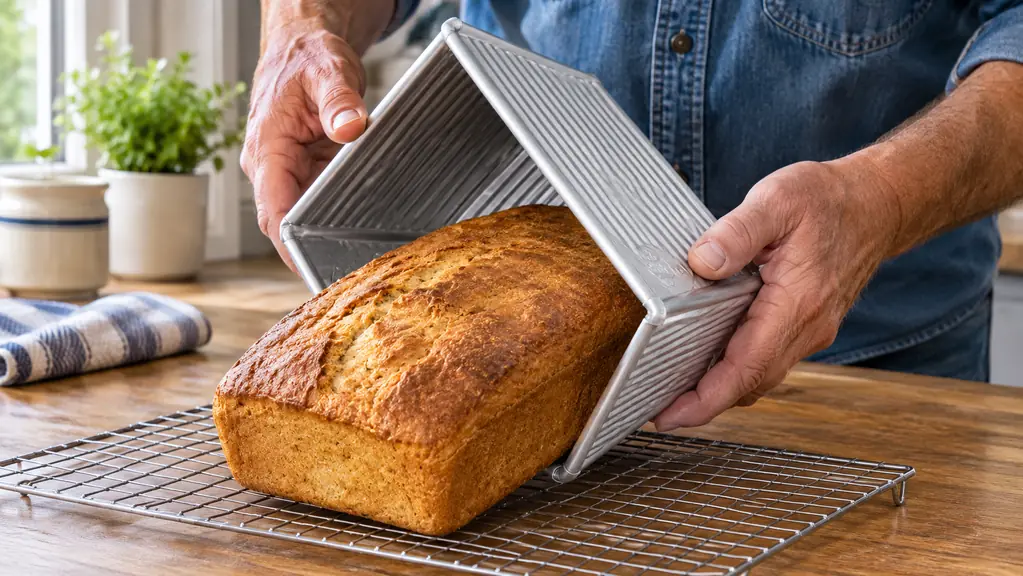
USA Pan was where I landed after a week of reading and one wasted afternoon in a store aisle. My list was short. Aluminized steel instead of the thin stamped material. A corrugated surface, which I had read helps air move under the loaf. Some honest weight in the hand. The pan I bought is 10 inches wide, 5 inches deep and 3 inches tall, with a 1.5 pound capacity and a listed weight of 1.3 pounds. It is rated to 450 F, it needs hand washing, and it carries a limited lifetime warranty.
None of that is exciting. A pan is not exciting. What it is, is the last thing between a good dough and a good loaf, and for six years mine was the weak link.
The first loaf out of the new pan, I stood at the oven door the way a hen stands over an egg. Same dough as the week before. Same oven, same rack, same hour of the morning. The top came out an even gold from edge to edge. The bottom came out brown instead of black. When I tipped it, the loaf let go with a small sound and dropped onto the rack whole. No knife run around the edges. No shaking. No language Dale pretended not to hear.
Same dough, same oven, same hour of the morning. The only thing that changed was the pan, and the loaf came out even from edge to edge.
Six years of dark bottoms, fixed by one pan
Aluminized steel with a corrugated surface that lets air move under the loaf. 10 by 5 by 3 inches, 1.5 pound capacity, rated to 450 F, hand wash, limited lifetime warranty.
Amazon Check Today's Price on Amazon →What the pan does is move heat. Aluminized steel is a mix of steel for strength and aluminum for conductivity, and the corrugated channels running across the bottom let air circulate under the loaf instead of trapping a hot pocket against one spot. That is the whole mechanism. There is no setting to adjust, no lid, nothing to learn. It is a piece of metal that takes the heat your oven gives it and hands it back evenly across the whole surface, which is exactly what my warped pan had stopped doing somewhere around 2019.
What it does not do is fix your dough. I want to be plain about that, because I have bought enough gear to know how this goes. If your loaf is underproofed, this pan will bake an underproofed loaf that is evenly browned. If your yeast is dead, you will get a very handsome brick. What changed for me was not the bread so much as the margin. The pan stopped adding a problem of its own on top of whatever I had already done wrong, and that turned out to be most of the trouble.
The size is worth a word. At 10 by 5 by 3 inches it holds 1.5 pounds, which is the large loaf most of my recipes already assume, and it took the same shelf in the cabinet as the pan it replaced. That matters in a kitchen with four feet of counter and one drawer that fights back every time I open it.
I wash the USA Pan by hand with a soft sponge and warm water, no soaking, because the coating is a silicone nonstick and hand washing is what the maker asks for. I still grease it. I have never fully trusted a nonstick surface with a wet dough and I am not going to start now. The loaf releases anyway, cleanly, with the crust intact. Two years of Saturday mornings, sandwich loaves, a few quick breads and one rye I will not discuss, and the surface looks the way it did the week I brought it home.
What I'd Tell You If We Were Sitting at My Kitchen Table
I would tell you that the pan is the cheapest fix in bread baking and the last one most of us try. A scale made my recipes repeatable. A thermometer taught me my oven lies by 15 degrees. The USA Pan loaf pan is the third thing, and it is the one that stopped me from slicing the bottom off every loaf before it reached the table. If your bread is pale on top, gummy in the middle and dark on the bottom, and you have already checked the oven with something other than the dial, look at the pan before you look at yourself.
I would also tell you not to expect it to make you a baker. It will not. It gives you one fewer thing to troubleshoot, and at 61 that is worth more than it sounds. Thirty years of Saturday mornings and I still keep the notebook. The difference is that the notes have gotten boring, because the loaves keep coming out the same.
One pan, one fewer thing to blame
Rectangular aluminized steel, 10 by 5 by 3 inches, 1.5 pound capacity, corrugated bottom for air circulation, rated to 450 F, hand wash only, limited lifetime warranty.
Amazon Check Today's Price on Amazon →