
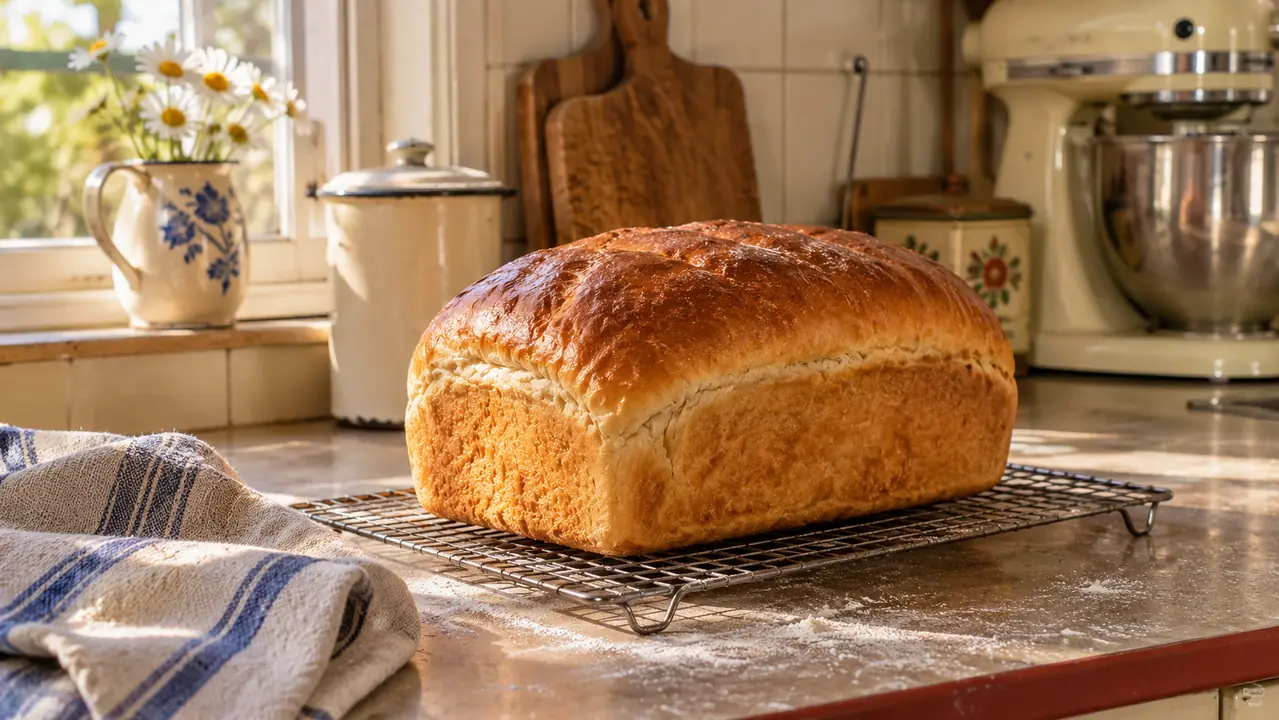
The first loaf I baked in the USA Pan 1.5 pound loaf pan came out level across the top, with straight sides and corners that held their shape. Dale looked at it and asked what I had changed about the recipe. Nothing, I told him. That was the part that stung a little and the part that convinced me.
I am Corinne, sixty-one, retired from the middle-school library in Lancaster, Pennsylvania, and I bake most weekends. Sandwich bread, cookies, a pie when the apples are worth the work, layer cakes for the church bake sale every fall. For years I blamed my uneven loaves on my own hands. Then I started weighing flour and writing down what I actually did, and I learned how much of the problem was the pan. The USA Pan loaf pan is aluminized steel, ten inches by five inches by three inches, with a one and a half pound capacity and four cups of volume. I have baked in it nearly every week for the better part of a year. Here is what I found.
The Quick Verdict
Bakes an even loaf, releases cleanly, and came through a year of weekly use without warping. It is a big pan, and it has to be washed by hand.
Amazon Check Today's Price →A level loaf without changing your recipe
Aluminized steel, a corrugated surface, and a generous one and a half pound capacity. Read the reviews from people who bake far more often than I do.
Amazon Check Today's Price on Amazon →How I've Used It
My kitchen is a small 1950s galley with about two feet of usable counter, so any pan has to earn its footprint. This one lives on top of the flour bin between bakes. It weighs a little over a pound, so moving it around is nothing, and it does not nest inside anything, which is my only real grumble about storage. If you have a drawer deep enough for a ten inch pan, it will fit there instead, but mine is full of pie tins and a rolling pin.
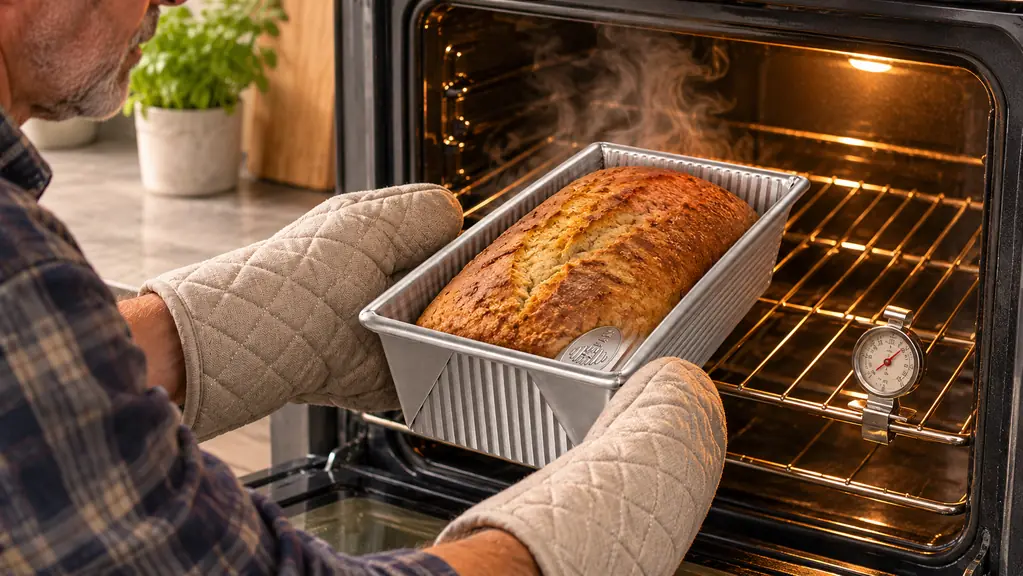
My oven is gas and runs about fifteen degrees hot. I have known that for years and I still have to correct for it every single time. I set the dial twenty-five degrees below what a recipe calls for and keep a thermometer clipped to the middle rack. Then I grease the pan with a thin film of shortening and a dust of flour for a sandwich loaf, or nothing at all for a quick bread with plenty of butter in the batter. The pan is rated to 450 degrees, so a hot oven for a rustic loaf is fine, and I have never taken it past 425.
I hand wash it, because the listing says hand wash and I am not going to gamble on the dishwasher to save ninety seconds. Warm water, a soft sponge, a rinse, then onto the rack to dry. In a year I have not had to scrub it once, and I have not had a loaf stick hard enough to need soaking. That is worth something on a Sunday evening when the dishes are already stacked and the light over the sink is the only one still on.
The one habit I had to learn was patience. Let the loaf sit in the pan for eight to ten minutes before turning it out. The pan releases cleanly, but the bread needs that time to settle and stop steaming. Pull it at two minutes and you get a loaf with a waist and a torn corner, and then you will blame the pan for something you did with your own two hands.
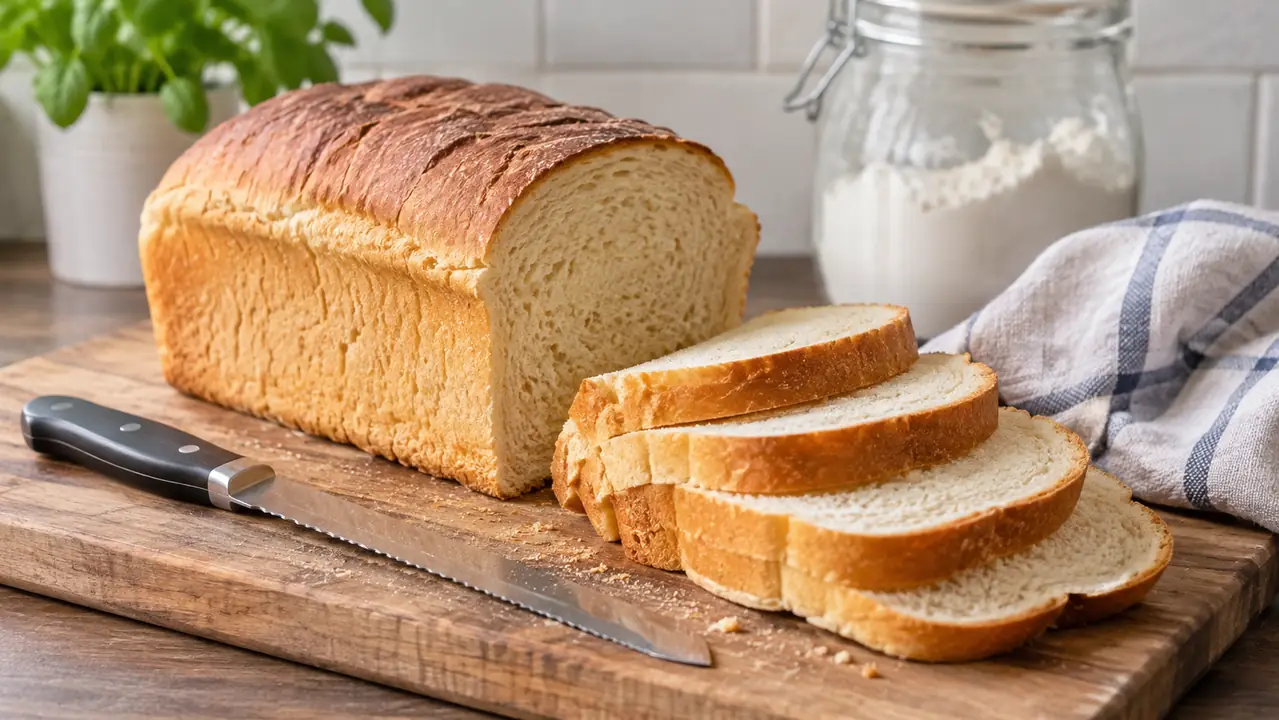
For the first three loaves I changed nothing else on purpose. Same flour, same hydration, same proof time, same oven correction, same cooling rack. I wanted to know what the pan alone did. The difference showed up in the sides of the loaf more than the top. My old pan gave me a loaf that leaned. This one gave me a loaf that stood up straight and sliced into even pieces all the way to the heel.
What the Corrugated Surface Actually Does
The surface of this pan is corrugated, a set of shallow ridges running the length of it. USA Pan says the ridges help air circulate around the pan, and I believe them, because the browning on the sides of my loaves is more even than it ever was in a smooth pan. But I want to be straight with you about how much of the improvement comes from the ridges and how much comes from the steel underneath them.
Aluminized steel is steel for strength with an aluminum coating for heat conduction. At the counter, that means the pan heats quickly and evenly and does not develop the hot spots a thin pan gets. My old pan turned out loaves that were dark down one side and pale down the other. I spent the better part of a year convinced my oven had a cold corner and considering a repairman. It did not. It was the pan, and I felt foolish about the year.
The ridges also keep the bread from sitting flush against a flat wall, so a little less surface is in contact with hot metal. My crusts come out a shade lighter than they did before, and I think that is why. If you want a dark, thick crust on a sandwich loaf, leave it in a few extra minutes or brush the top with milk before it goes in. I do not want that myself, so the lighter crust suits me fine and Dale has not complained once.
The other thing the corrugation does is stiffen the pan. It does not flex when I lift it with a full batter in it, and it does not buckle when I set it down hard on the rack. My old pan flexed enough that a loose batter would slosh over the end and onto the oven floor, and I would smell it before I saw it. That has not happened once in this one.
A Year of Weekly Loaves
I have baked in this pan somewhere north of forty times. That is not a laboratory sample, but it is enough to see how a pan wears when nobody is being careful with it.
The nonstick coating is intact. No bare patches, no scratches from a knife, no spot where a loaf stuck and took the finish with it. I have never had to chisel anything out of a corner. The only place I see any change at all is along the top rim, where the coating has lost a bit of its sheen from being handled wet and dried on the rack. That is cosmetic and it never touches the bread.
The pan has not warped. It has not rusted, even though I dry it on a rack instead of toweling it. The corners are still square and it still sits flat, which sounds like a low bar until you have owned a pan that rocked on the rack and poured batter sideways into the bottom of the oven. I have owned two of those.
I also want to mention the smell, oddly. A new nonstick pan usually gives off something for the first few bakes. This one did not, or if it did I never noticed it over the bread. By the third Sunday it smelled like nothing but toast.
The warranty is a limited lifetime. I have not had to use it and I hope not to, but it is there, and for a pan that gets used this often I like knowing it is written down somewhere.
The Size Question: 1.5 Pounds and 4 Cups
This is a large loaf pan. Ten inches by five inches by three inches, one and a half pounds, four cups of volume. Plenty of sandwich bread recipes are written for an eight and a half by four and a half pan, and if you pour one of those straight into this one you will get a loaf that is wide and a little squat instead of tall. It will still taste fine. It will just look like a loaf that gave up.
I scaled my standard recipe up by about a quarter and it fills the pan properly. A dough that weighs around two pounds raw is about right for a sandwich loaf here. What you get is a loaf with slices long enough for a real sandwich and a crust to crumb ratio I prefer to a taller, narrower loaf. Dale, who is a retired machinist and the most honest taster I have, noticed the difference in the first week without being told what to look for.
For quick breads, know that a banana bread recipe written for an eight inch pan will come out thinner here and will bake faster. Start checking at fifty minutes rather than sixty-five. I learned that with a pumpkin bread that came out dark at the edges, and I want to be clear that it was my mistake and not the pan's.
Where It Falls Short
It has to be hand washed, and a pan this size is awkward in a small sink. Mine barely fits flat in the basin, so I wash it at an angle and it works. If your sink is shallow and your drying space is already spoken for by a dish rack and a colander, that will bother you every week. It bothers me a little, and I have made my peace with it.
The nonstick is a silicone coating, and like every nonstick surface it is not a forever thing. I expect it to outlast my old pan by a good margin, but I do not carve a loaf in the pan and I do not cut slices while the bread is still sitting in it. Rack and knife, not pan and knife. If you are someone who cuts corners in a pan, buy something cheaper.
The size is the other limitation. If two people go through half a loaf a week, this pan bakes more bread than you need, and a smaller pan would serve you better. It is a generous pan for a generous purpose, and generosity is not always what a household of two actually wants on a Wednesday.
And it is a workhorse, not a showpiece. It will not be the thing you leave out on the counter when your sister visits. I do not mind that at all. I have a pie plate for showing off and this pan can stay by the flour bin where it belongs.
What I Liked
- Bakes evenly across the whole loaf, side to side
- Releases cleanly with a light grease and no flour
- Stiff enough that a full batter does not slosh when you move it
- Has not warped, rusted, or lost its coating in a year of weekly use
- Rated to 450 degrees, so it works for hot-oven breads
- Limited lifetime warranty
Where It Falls Short
- Must be hand washed, and it is awkward in a small sink
- The 1.5 pound capacity is large for a two-person household
- Recipes written for an 8.5 by 4.5 pan need scaling up
- The nonstick coating will not last forever, whatever the warranty says
Forty loaves in, the coating is intact, the corners are square, and the pan still sits flat on the rack.
Who This Is For
This pan is for someone who bakes sandwich bread or quick breads regularly and is tired of a loaf that browns on one side, sticks in the corners, or comes out with a waist because the pan flexed under a wet batter. It suits a bigger household, or anyone who slices a loaf and freezes half of it for the week. And it suits a baker who has already figured out that the pan is part of the recipe.
It also suits someone who has been quietly blaming themselves for uneven results. That was me for years. I bought better flour and a scale and a thermometer, and the pan was the last thing I thought to change, and it turned out to be the one that made the difference I could see from across the kitchen.
Who Should Skip It
Skip it if you bake one loaf a month and your current pan is doing fine. A pan is not a personality, and there is no prize for owning a better one than you need. Skip it if you have a small sink and no patience for hand washing, because that instruction is not going to change and it will wear on you.
And skip it if every recipe in your binder is written for an eight and a half inch pan and you have no interest in rescaling them. A pan that does not fit the way you already bake is not an upgrade, it is a drawer ornament, and I have three of those to prove it. Match the tool to the habit, then buy the good one.
Forty loaves in, still level across the top
Ten inches by five inches by three inches, aluminized steel, rated to 450 degrees, and still sitting flat on my rack after a year of Sundays.
Amazon Check Today's Price on Amazon →