
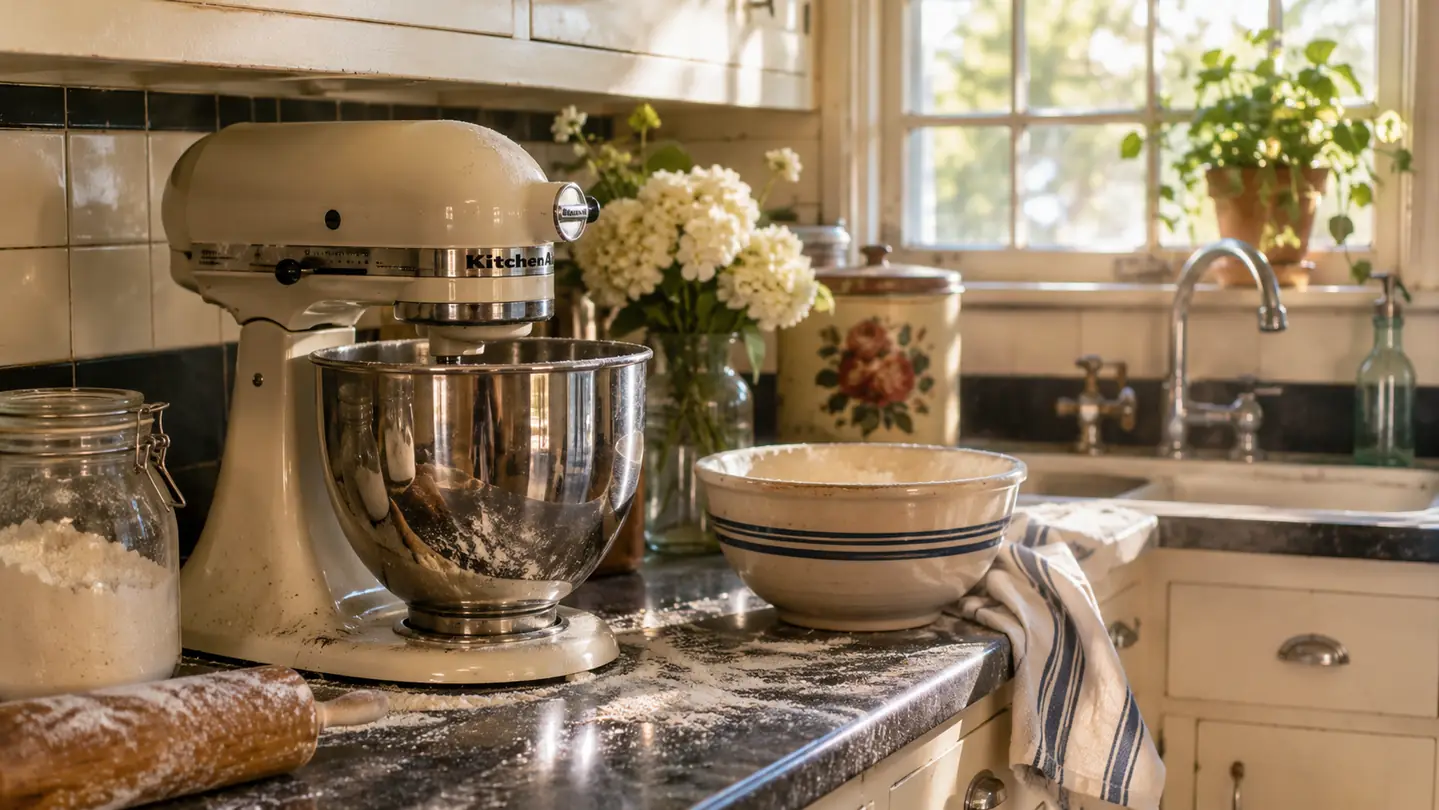
Every Saturday morning I haul the flour out and ask the same question: is the thing on my counter earning its space, or just standing there looking professional? In a kitchen with about four feet of usable counter, that question is not rhetorical. For years I mixed everything by hand and with a cheap hand mixer, and I told myself the results were close enough. Most of them were. The bread was not, and I knew it every time I cut into a loaf with a tight, uneven crumb.
What changed things was a KitchenAid Artisan, the 5 quart tilt head model, KSM150PS. I did not buy it because I wanted an appliance with a following. I bought it because I was tired of stopping every ninety seconds to scrape down a bowl while the dough sat there going nowhere. What follows are ten honest reasons it suits the way a weekend baker actually works. Not a bakery schedule. A Saturday afternoon, a church bake sale in October, and a husband named Dale who will tell me the truth about a crust.
Ten minutes of stirring you keep doing by hand, done without you
The KitchenAid Artisan works dough and batter at the speed you set while you grease pans and check the oven. That is the whole argument in one sentence.
Amazon Check Today's Price on Amazon →It kneads bread dough while you do something else
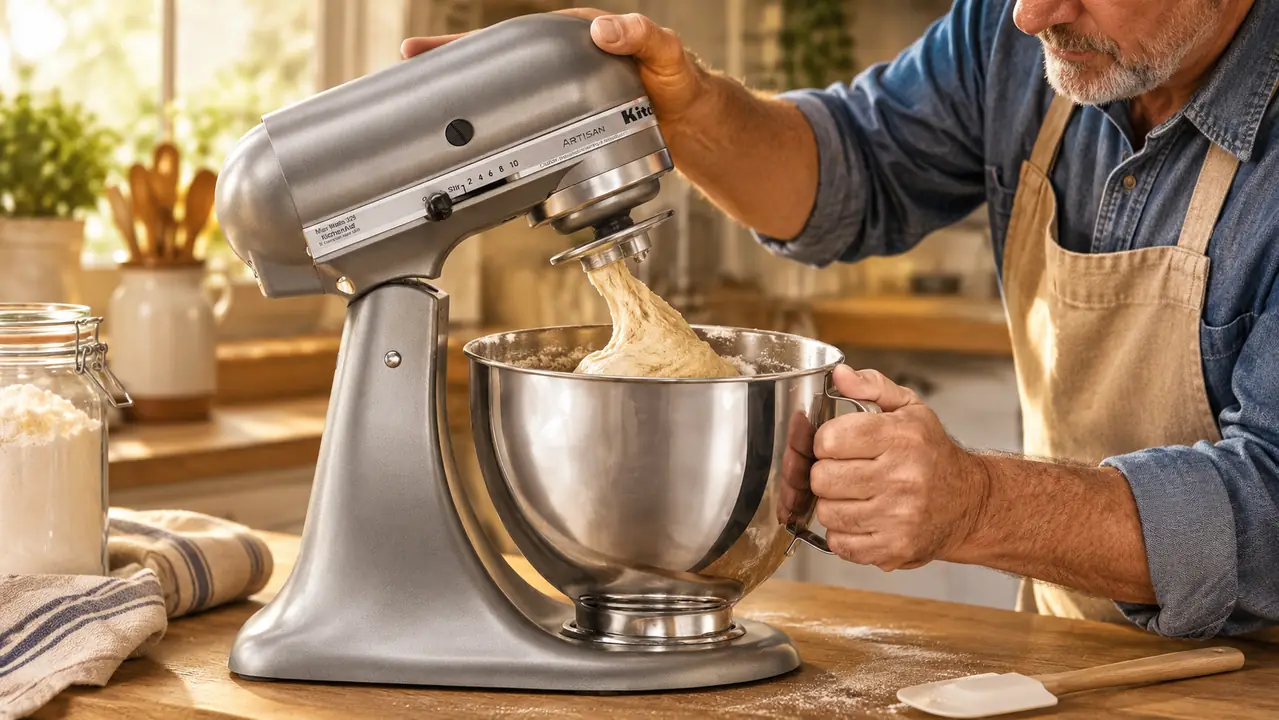
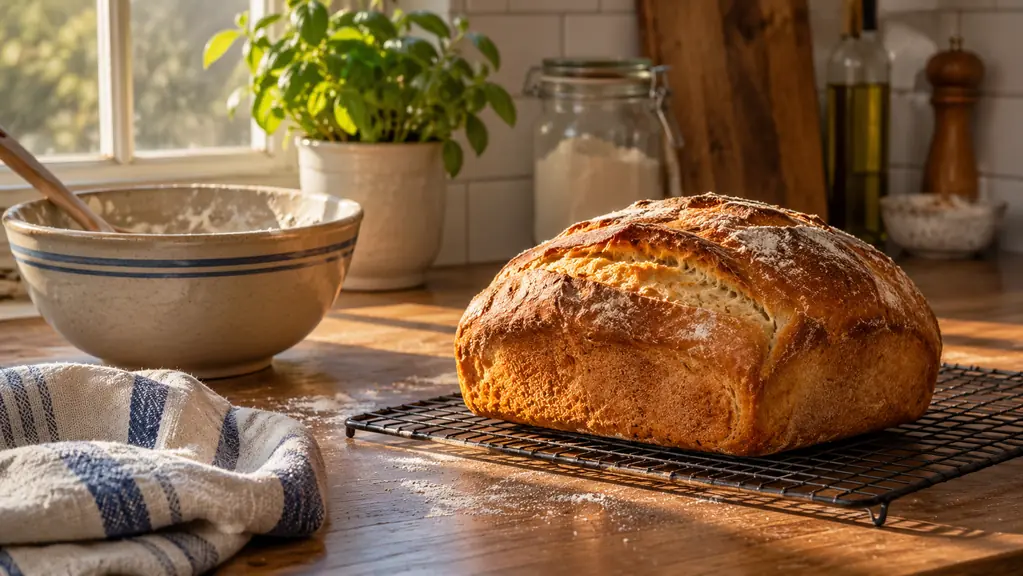
Bread is where a stand mixer stops being a convenience and becomes a different process. The KitchenAid works a shaggy mass for eight to ten minutes without my hands in it. I grease a bowl, check the oven temperature, answer the phone. What I noticed after a month was not speed but repeatability. Same flour, same water, same eight minutes, same loaf. My hand-kneaded bread was good on the days I had patience and mediocre on the days I did not, and Saturdays are not always patient days.
One bowl for the whole cookie batch, flour included
Adding flour to creamed butter is where a hand mixer loses the argument. The beaters fling it, the bowl is too small, and I end up folding the last cup in by hand anyway. The 5 quart bowl has room for a full batch to keep moving, so the flour goes in and the machine takes it. Fewer bowls to wash on a Sunday night is not a small thing when you have been baking since nine in the morning.
A double batch of layer cake batter fits with room to spare
Birthdays and the fall church bake sale both mean volume. Two batches of cake batter fit in the 5 quart bowl, which means I mix once, pour, and bake instead of mixing twice and washing the bowl in between. If you bake for a crowd even four times a year, this is the reason that matters more than any other on this list. I noticed it the first October I owned the machine and have counted on it every October since.
The tilt head lifts clear so you can scrape with two hands
The head tips back and stays up. That sounds like nothing until you have spent years holding a hand mixer in one fist and a spatula in the other. I can scrape the bowl down, check the bottom for unmixed butter, and drop the head back without turning anything off or balancing anything. It is the part of the design I would miss most if it went away.
Ten speeds, from a very slow stir to a fast whip
The speed control runs from a very slow stir to a very fast whip, which covers more ground than I expected. A slow stir folds nuts or chips into stiff dough without smashing them to bits. The fast end takes egg whites to stiff peaks in a couple of minutes. Most weekend baking lives in the middle four speeds, but the two ends are what save you when a recipe asks for something specific and you have no other way to do it.
The bowl comes off and goes straight to the sink
The bowl is removable and lifts straight out. I carry it to the sink, soak it, and wipe the base with a damp cloth. No reaching around a fixed bowl with a sponge, no crumbs working their way into the works. For anyone with a narrow sink or a shoulder that complains, that one detail decides whether the machine gets used or resented. Mine gets used.
325 watts holds its speed through stiff dough
Stiff dough is the test. A weak motor slows down and starts to labour, and you finish the job by hand while the machine whines at you. At 325 watts this one keeps the speed you set. I have pushed mine through a heavy rye dough without a stall. It does get warm to the touch after ten minutes of that, which is normal and worth knowing before you plan three loaves back to back.
Both hands stay free for pouring and scraping
A hand mixer occupies one hand permanently. With a stand mixer I can pour a sponge in a thin stream, add flour at the edge of the bowl, or keep a spatula ready. That sounds minor until you are midway through a genoise and the recipe wants a slow stream of melted butter while the mixer keeps running. The first time I did that without enlisting Dale, I understood what the machine was actually for.
It fits a small kitchen at 8.7 inches wide
My kitchen is a 1950s galley with four feet of counter, so footprint was the question I argued with myself about longest. The base is 8.7 inches wide, 14.1 inches deep, and 13.9 inches tall. It sits under the upper cabinet with a couple of inches to spare. It runs close to 22 pounds, so I do not lift it in and out of a cupboard. It stays out, which is the entire point of owning one.
It is built to sit out and be used every week
The body is zinc, and it has the weight and solidity of something meant to live on a counter for a long time. KitchenAid backs it with a one year hassle free replacement warranty, which is not long, and I would rather say that plainly than dress it up. What I can tell you is that mine runs most weekends and shows no play in the head and no looseness where the bowl seats.
What I'd Skip
Here is the honest part. A KitchenAid does not make you a better baker. It makes you a more repeatable one, and repeatable is what gets you to better. It will not rescue a recipe with too much water in it, and it will not save you from an oven that runs fifteen degrees hot, which mine does and which I check with a thermometer every single time. If you bake once a month and it is mostly drop cookies, a hand mixer and a sturdy bowl will do the job, and I would spend the difference on pans. The mixer earns its counter space when you bake most weekends and your arms are tired of doing the work.
Same flour, same water, same eight minutes, same loaf. That is what I wanted, and that is what I got.
If you bake most weekends, this is the machine that stops fighting you
5 quart bowl, ten speeds, tilt head, 325 watts. Mine has run most Saturdays for years and still sits level on the counter.
Amazon Check Today's Price on Amazon →