
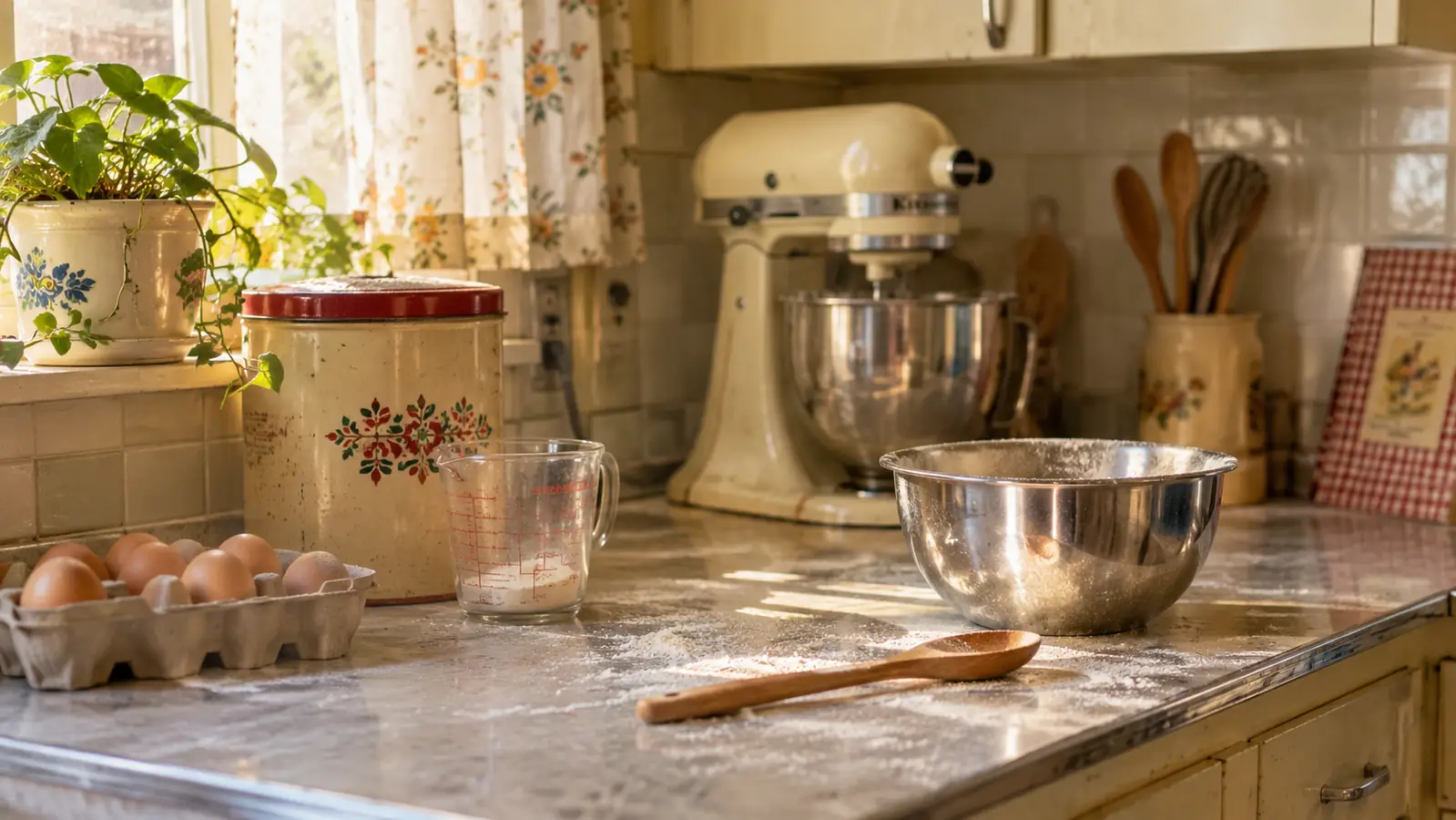
I baked without a stand mixer for thirty years. Sandwich bread most Sundays, cookies when the mood took me, a layer cake for every family birthday and two more for the church bake sale in October. I did all of it by hand with a wooden spoon and a bowl I bought in 1988, and I told myself that was the honest way to bake.
Part of that was stubbornness and part of it was the kitchen. Our house went up in 1951 and the counter space is what you would politely call tight. A stand mixer looked like a piece of furniture to me, and I could not picture where it would live. So I kept not buying one. And I kept scraping my knuckles against the inside of the bowl while the dough got stiffer and my wrist got tireder.
Then two winters ago Dale asked me what I actually wanted for my birthday, and I heard myself say a KitchenAid. He looked at me the way he did when I announced I was learning to drive at fifty-five. I ordered the Artisan, the 5-quart tilt-head, and then spent a week convinced I had made an expensive mistake. I had been baking a certain way for three decades. I did not need a machine to tell me otherwise.
The box sat on the kitchen table for two days before I opened it. The mixer weighs ten pounds, which matters when you are sixty-one and thinking about lifting something in and out of a cupboard. It measures roughly fourteen inches deep and nine wide. I cleared the corner by the toaster, moved the crock of utensils into the pantry, and that was that. No renovation required.
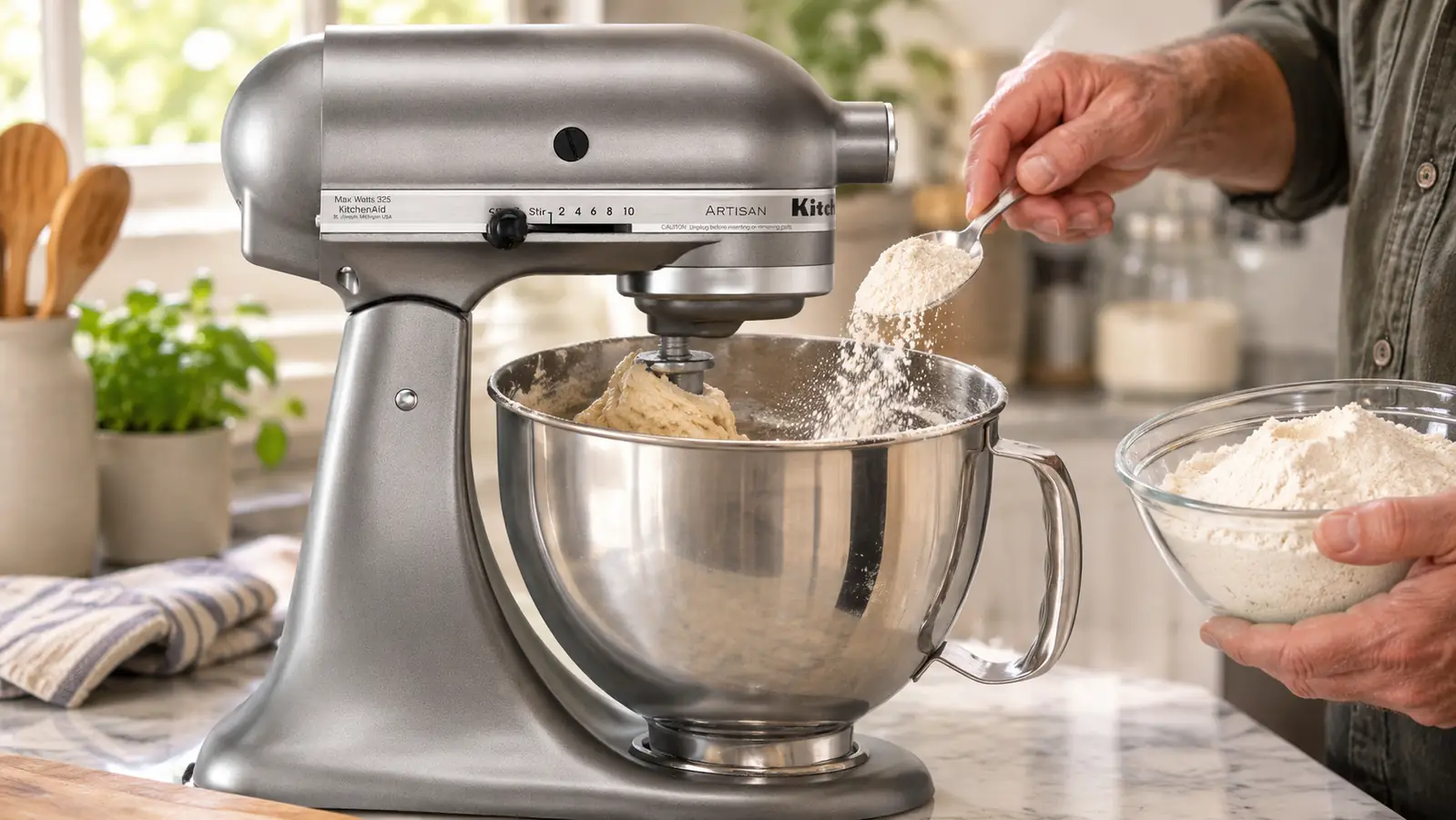
The first thing I made was a plain butter cake. Cream the butter and sugar, add the eggs one at a time, then the flour alternately with the milk. I have made that cake perhaps two hundred times. This time the butter and sugar came together in a way I had never managed by hand, light and even all the way down to the bottom of the bowl, with nothing stuck to the sides. The slide control runs from a very slow stir up to a fast whip, ten speeds in all, and for once the setting I wanted was the setting I got.
The bowl lifts out and goes straight to the sink. That one plain thing is why the mixer stays on my counter instead of in a cupboard.
The 5-Quart Tilt-Head I Wish I Had Bought at Forty
Ten speeds, a bowl that lifts out for the sink, and a footprint that fits a 1951 kitchen. It is the same machine that has sat on my counter for two winters.
Amazon Check Today's Price on Amazon →What I did not expect was how much of baking turns out to be waiting. Dough wants eight minutes of work, and eight minutes by hand is a long, hot, arm-aching time. Eight minutes with the machine going is time I spend greasing the loaf tin and lining up the cooling rack. That is not a small change. It is the difference between baking bread on a Saturday and deciding bread is too much trouble on a Saturday.
It is louder than I expected, a steady low hum rather than a whine, and it will creep an inch across the counter if I leave it on a high speed with something stiff in the bowl. I keep a folded towel under it now. That solved it, and it cost me nothing.
The bowl holds five quarts, which is more than a single cake needs and about right for a double batch of rolls at the holidays. It lifts out and goes to the sink, and the outside wipes down with a damp cloth. The head tips back so I can get a spatula into the bowl without wrestling it. Small conveniences, all of them, and I use every one of them every weekend.
The other thing nobody tells you is that it is heavy enough that you will not move it twice. The KitchenAid lives on my counter, full stop. If your kitchen genuinely has no spare corner, that is a real consideration and I would not pretend otherwise.
What It Changed and What It Didn't
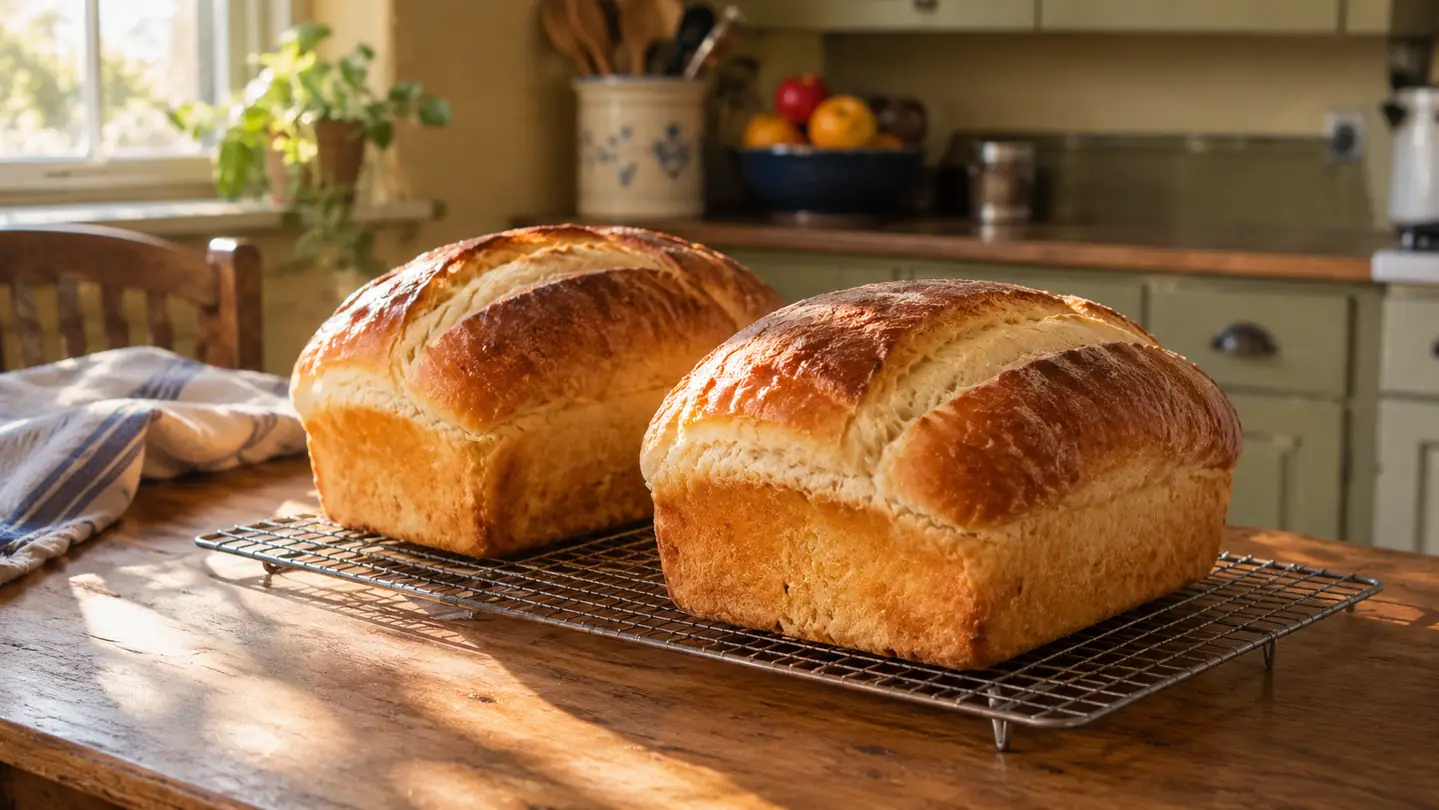
Here is my honest accounting. My cakes bake up more even. My buttercream is smoother and takes about half the time it used to. Bread has become a weekend habit rather than an occasion. Cookies are the same as they ever were, which is to say good, because cookie dough was never the hard part.
What it did not do is make me a better baker in any way I could not have managed with practice and a decent scale. It did not fix the oven that runs fifteen degrees hot, which I still correct for with a thermometer on the rack. It did not teach me to judge a dough by feel. A good tool removes the part of the job that was only ever labor. The judgment is still yours.
What I'd Tell You If We Were Sitting at My Kitchen Table
I would tell you that a machine is not a reason to bake, and it will not turn you into someone who bakes. If you pull out the flour four times a year, keep your hand mixer and put the money toward a decent pan instead, because a thin pan will ruin more bakes than a missing mixer ever will.
But if you are the person who bakes most weekends and has been talking yourself out of this since the nineties, I would stop talking. I lost thirty years to a corner of counter I could have cleared in an afternoon. The KitchenAid has earned its spot next to the toaster, and the only thing I regret is the years I spent creaming butter with a spoon and telling myself it was better that way.
Thirty Years Was Long Enough to Wait
The Artisan 5-quart tilt-head. Ten speeds, a bowl that goes straight to the sink, and enough weight that it will stay put once you find its corner.
Amazon See the KitchenAid Artisan on Amazon →