
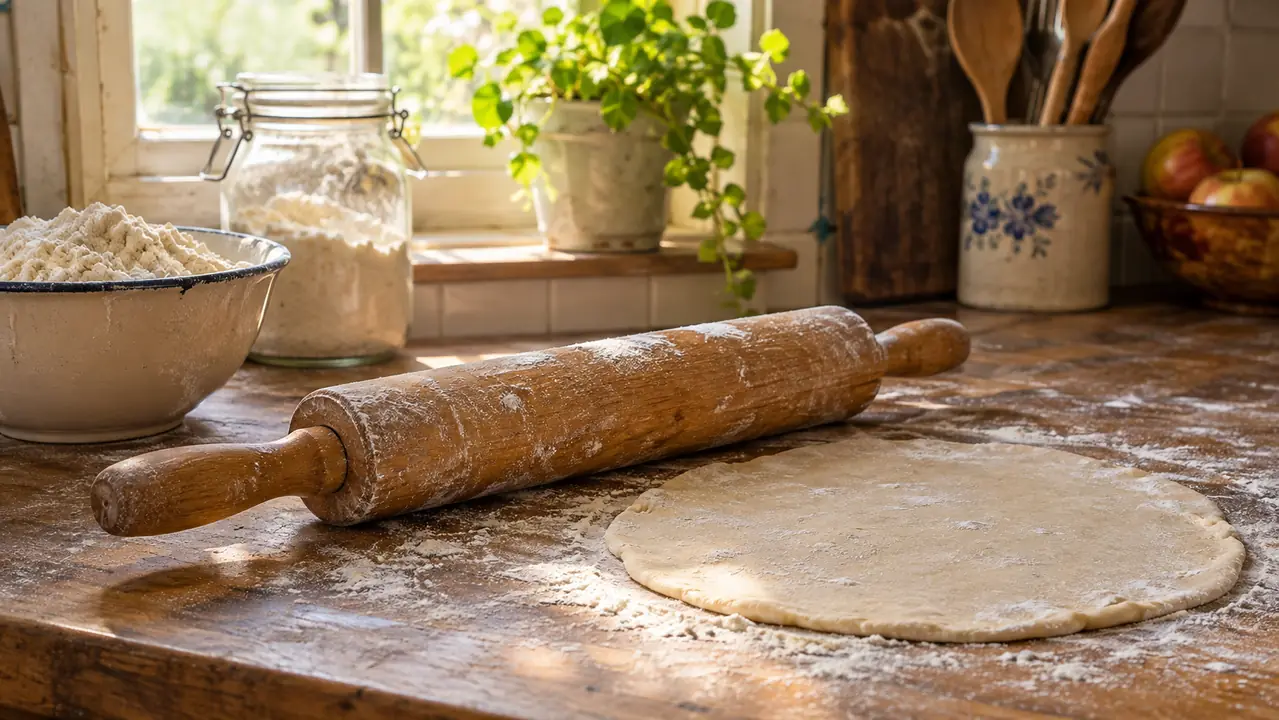
I have a drawer in my kitchen that is a museum of good intentions. A bench scraper I bought for one batch of croissants. A pastry blender. A set of nested cookie cutters in shapes nobody has requested since 1998. And wedged underneath all of it, the Farberware Classic Wood Rolling Pin, 18 inches, about a pound, that I have reached for almost every weekend for close to thirty years.
Dale, my husband, is a retired machinist, which means he looks at a kitchen tool and sees a machined object with a tolerance. He picked that pin up once, rolled it across the counter, and said, "That's flat and that's balanced. Don't lose it." He was right then and he has been right every year since. Here are ten reasons a plain hardwood pin still earns its space, even in my small 1950s kitchen where the counter is measured in inches and the oven runs fifteen degrees hot.
The one tool in my kitchen that never went to the donate box
Hardwood, 18 inches, one pound, and nothing to calibrate. Check today's price on Amazon.
Amazon See today's price on Amazon →Ten Reasons It Stays in the Drawer
Eighteen inches covers a pie crust in one pass
My counter is small, so pie dough gets rolled in stages whether I like it or not. With a short pin I was forever chasing the edges, lifting, turning, rolling again. This one is listed at 18 inches, and measured end to end it comes in just under that, which is still wider than any dough I make. One pass from the middle out, a quarter turn, another pass, and the crust is bigger than the plate. Fewer passes means less flour worked into the dough, and a crust that stays tender instead of tough.
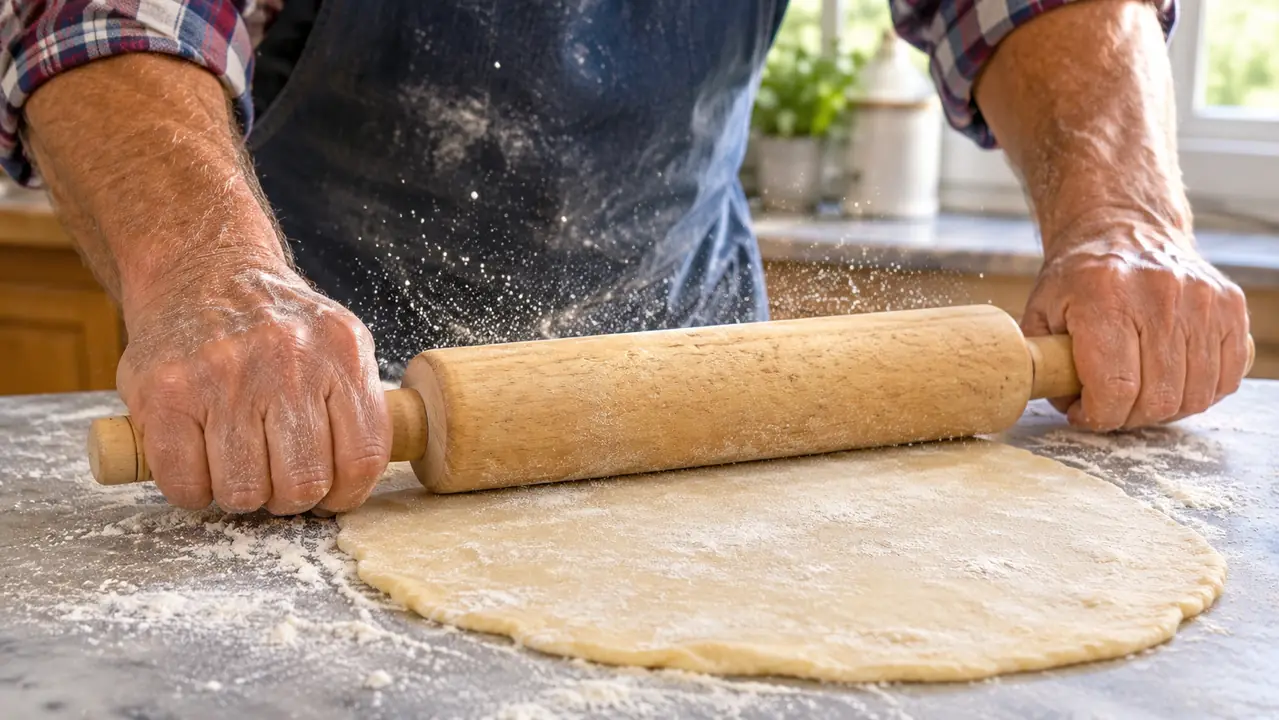
One pound of weight lets gravity do half the work
A pin that is too light makes you push. Pushing stretches dough and stretches your shoulders. This one weighs in at about a pound, which is heavy enough to flatten a disk of chilled pie dough with barely more than a forward roll, and light enough that I can use it for twenty minutes without my forearms complaining. That balance is the whole reason I stopped shopping for anything fancier.
The hardwood surface does not drag on the dough
This is the quality that is hardest to describe and most obvious in the hand. A moisture-resistant hardwood pin with a smooth surface passes over a sheet of dough and lets go. Cheap pins grab. You feel the dough catch, you press harder, and the sheet tears at the edge. The Farberware surface has stayed smooth through decades of flour and weekly use, and I have never once had to fight it.
The handles spare your hands on a long baking day
The handles are designed to give you control, and they do, but what I notice is the end of the afternoon. Three dozen cookies and two pie crusts in, my wrists are still fine. The pin is balanced end to end, so it does not fight the direction you roll it, and the grip sits where your hands naturally land. I did not appreciate that until I spent one Christmas with a borrowed pin that wobbled.
There is nothing on it to break, jam, or calibrate
No settings. No parts that thread together and work loose. No coating to chip at the corner. It is a piece of hardwood with handles on the ends, and the only maintenance it has ever asked of me is a wipe with a dry cloth and an occasional rub of mineral oil. Dale has repaired two stand mixers and a food processor in our marriage. He has never once had to look at this pin.
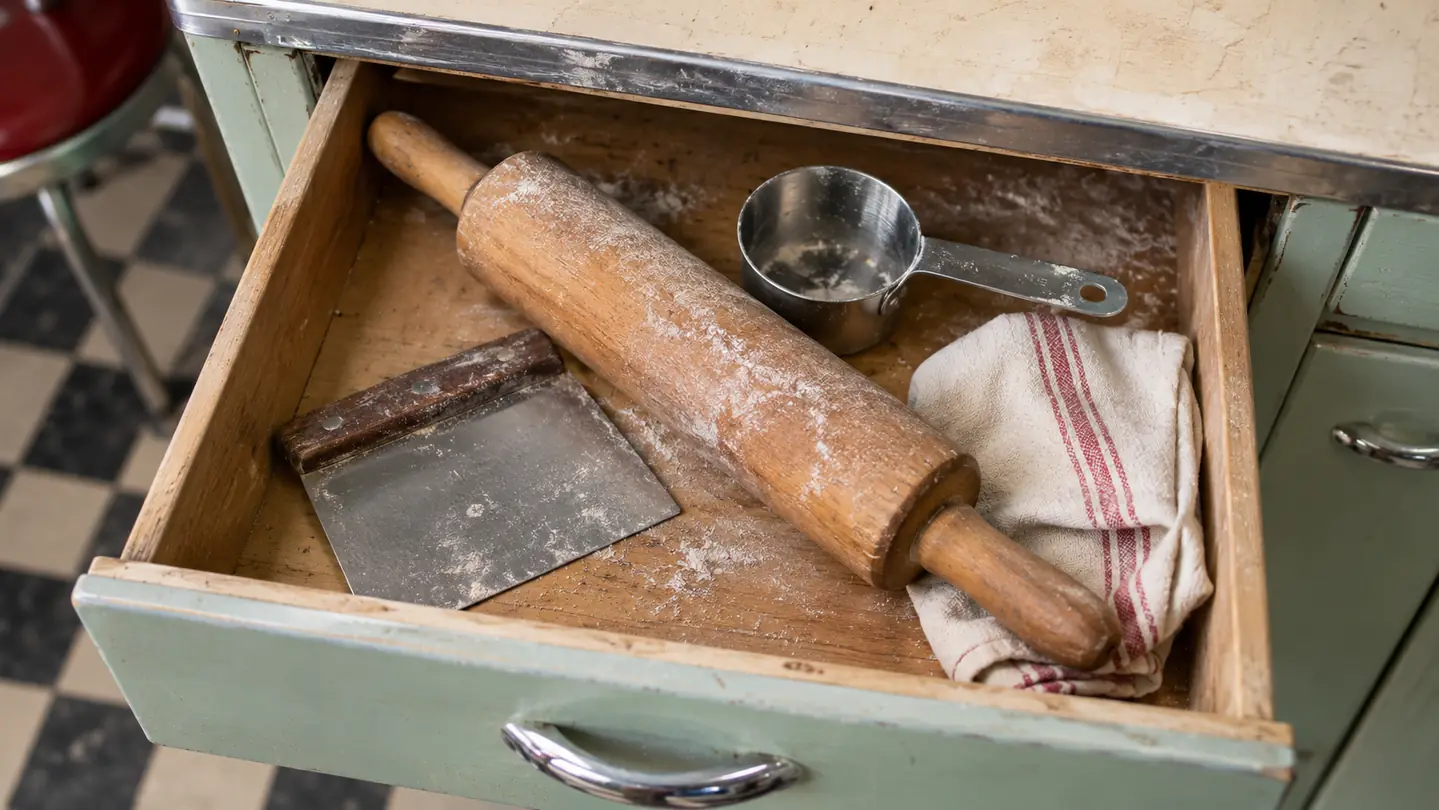
It measures 17.5 by 2.5 inches and lies flat in a shallow drawer
Storage is not a small consideration in my kitchen. The pin is 17.5 inches long and 2.5 inches across, which means it lies flat in the shallow drawer under the counter instead of standing in a crock on the countertop taking up the one clear work surface I have. If you have ever moved a stand mixer twice to find room to roll out dough, you understand why this matters more than any feature list.
One pin handles pizza, pie, pastry, and cookies
I have used it on a Tuesday night pizza dough that fought back and on a delicate pastry that did not want to be touched. It rolls out pie crusts, cookie dough, biscuit dough, and the occasional batch of cinnamon rolls. Having one tool that covers all of it means I am not storing four tools that each do one thing well and nothing else.
Cleanup takes about forty seconds
Flour comes off with a dry cloth or a quick pass under the tap followed by a thorough towel dry, and it is ready to go back in the drawer. I do not soak it and I would not put it in the dishwasher, and neither would you if you had watched what water does to a hardwood board over time. Compared to the food processor I have to disassemble after pie dough, this is nothing.
It teaches you to read the dough instead of the recipe
Here is what a good tool actually does. It gets out of the way so you can notice things. Because the pin rolls predictably, I learned what dough feels like when it needs five more minutes in the refrigerator, and what it feels like when it is about to turn sticky. A scale makes recipes repeatable. A pin like this lets you feel the dough. Neither one makes you a pastry chef, and I would not tell you otherwise.
It has outlasted every gadget sitting on top of it
The bench scraper is gone. The pastry blender went to my daughter's first apartment. The novelty cutters went to the church rummage sale. The pin is still there, still flat, still balanced, still the thing I reach for first on a Saturday morning. I am sixty-one and I expect it to outlast me. That is not a claim I can make about much in that drawer.
What I'd Skip
I would skip the marble pin unless you make a lot of laminated pastry and have the refrigerator space to chill dough between turns. I would skip any pin that is too light to press down on its own, because you will spend the money twice. And I would skip the tapered French pin if what you bake most is pie, since a straight pin with handles is far easier to control when the dough is cold and uncooperative. What I would not skip is a plain hardwood pin with a smooth surface and enough weight to work. Farberware has been making that one for a long time, and my experience is that it does the job without asking anything of you.
Dale picked it up once, rolled it across the counter, and said, "That's flat and that's balanced. Don't lose it." Thirty years later it still is.
Still flat, still balanced, still the first thing I reach for
Eighteen inches of moisture-resistant hardwood, about a pound, with handles built to reduce hand fatigue. Check today's price on Amazon.
Amazon See today's price on Amazon →