
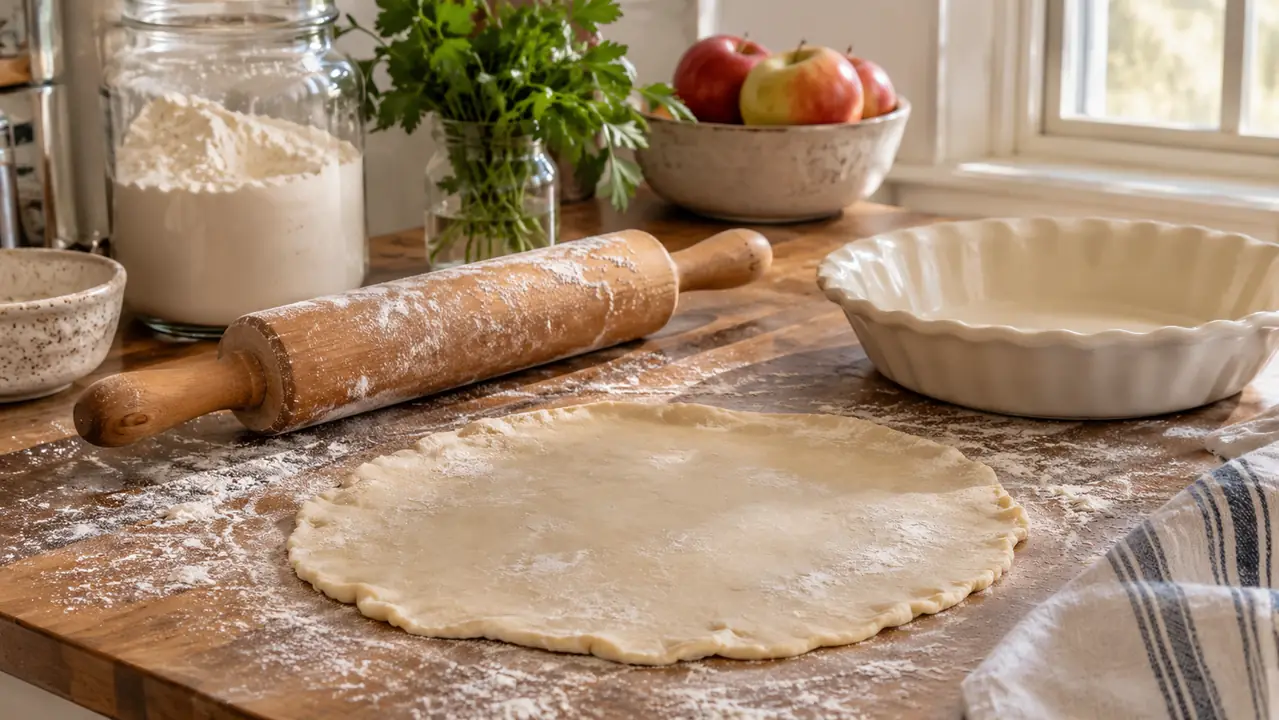
My grandmother rolled pie crust on the back of a floured cutting board, with a plain wooden pin and a chipped enamel cup of cold water. I have her recipe card in the drawer by the stove. It says to cut the fat in until it looks like coarse meal, which is the kind of instruction that assumes you already know what you are doing.
For years I did not. My crusts came out tough or crumbly, and I blamed the shortening, the weather, my hands. Then I started weighing flour and buying better pans, and the pies improved. The one thing I had not replaced was the rolling pin. It was a cheap thing with handles that spun loose, and every fall I fought it across the counter while the butter in the dough warmed up and the clock ran down.
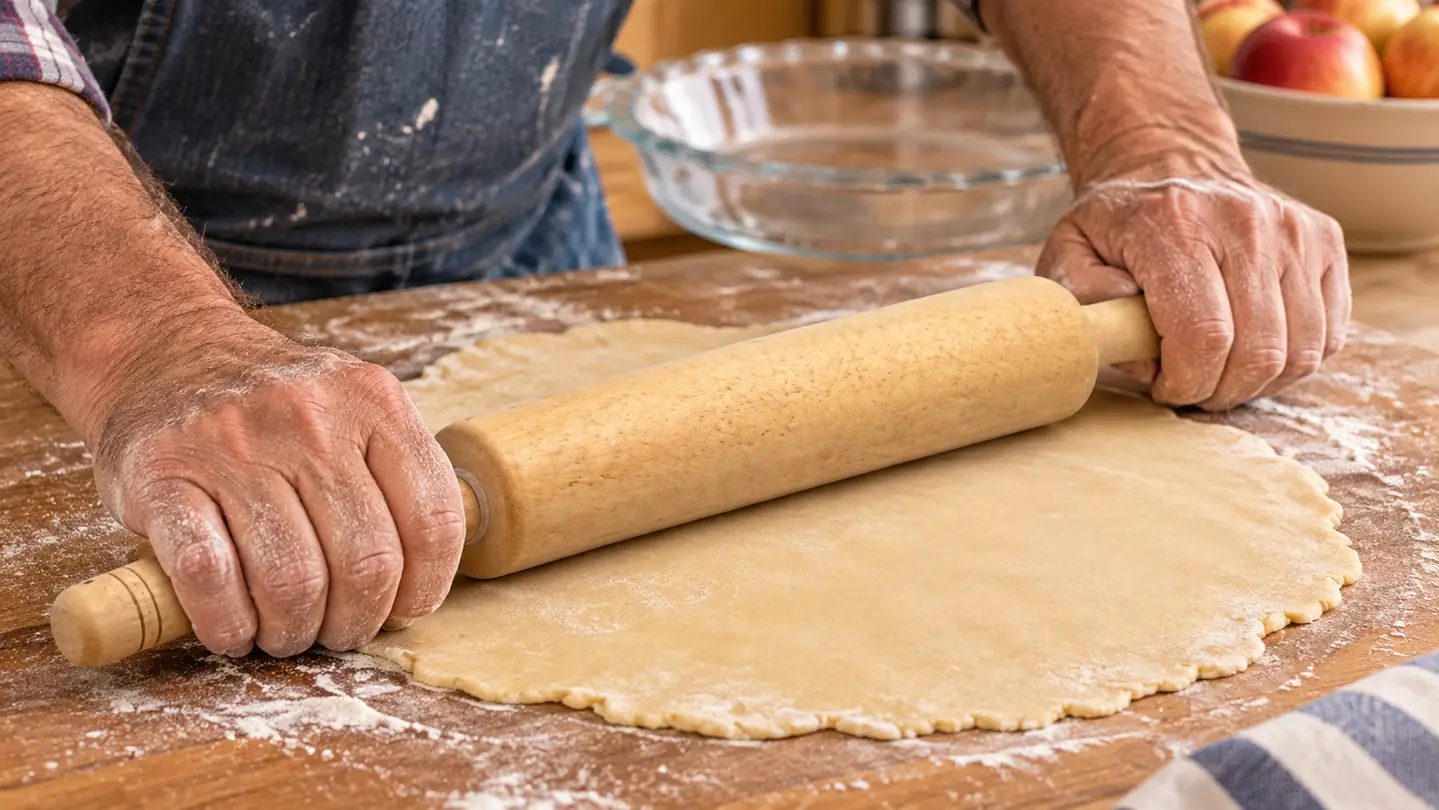
Last September, before the church bake sale, Dale came home from the hardware store with a Farberware Classic Wood Rolling Pin. He had seen it on a shelf and thought the handles looked solid. It is 18 inches long, made of hardwood, and weighs about a pound. I wiped it down, floured the counter, and rolled out the first round of dough for a two-crust apple pie.
The difference was not magic. A rolling pin does not fix a recipe. But the Farberware pin did something I had stopped expecting: it rolled without dragging. The dough moved under it instead of sticking and tearing. The handles gave me a place to push from, and the pin stayed balanced from one end to the other, so I was not fighting it to keep the circle even.
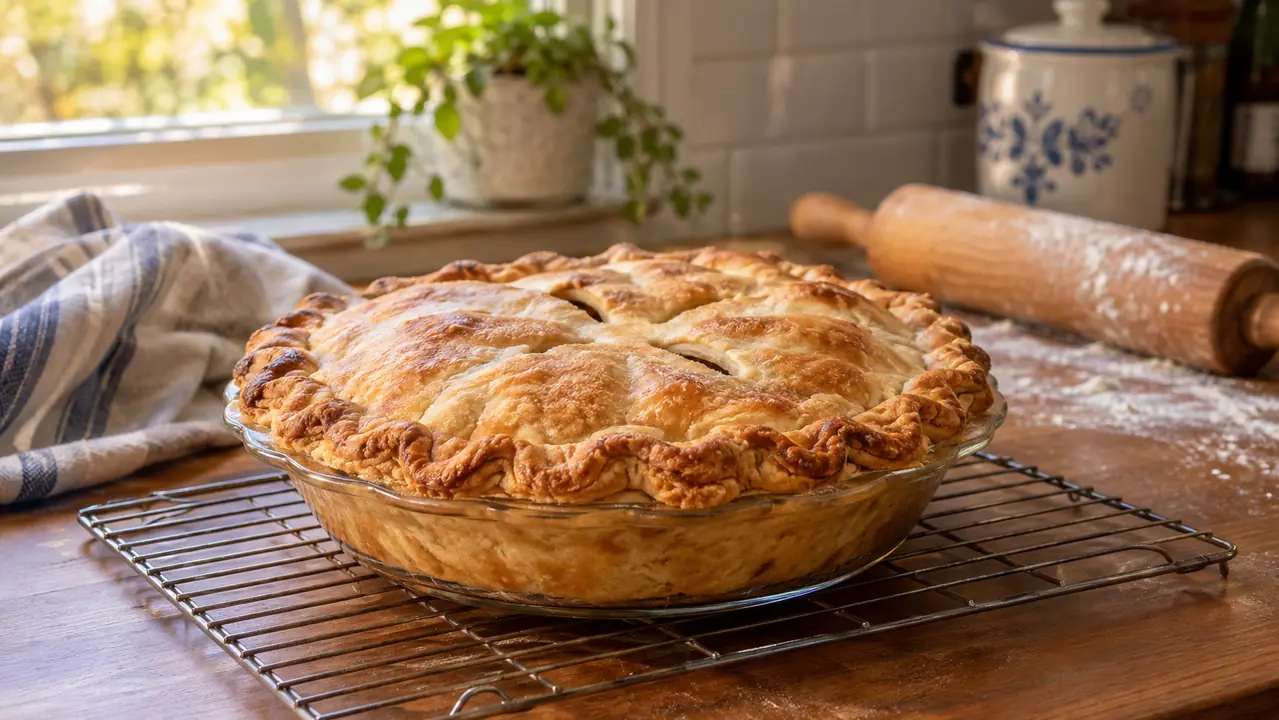
I rolled the bottom crust, fitted it into the plate, and rolled the top. For the first time in years, the two rounds were close to the same thickness. Dale, who is a retired machinist and notices things like that, said the pie looked like it came from a bakery. He also said the filling was a little sweet, which is his job.
The dough moved under it instead of sticking and tearing. That was the whole change.
The pin I reach for before the church bake sale
The Farberware Classic Wood Rolling Pin is 18 inches of hardwood with balanced handles. It is not fancy. It is the one I keep on the counter now.
Amazon See the Farberware rolling pin on Amazon →That week I made six pies for the sale: two apple, two pumpkin, one cherry, and one mincemeat for the older crowd. The pin stayed on the counter the whole time. I did not have to re-flour it every few passes, and I did not have to wrestle the dough off the counter. When I cleaned it, I dried it right away, the way you do with any wood tool. It has not warped or split.
What I noticed most was the quiet. A bad pin makes a racket, clicking and scraping. This one rolled smooth and steady, and I could hear the radio. That sounds small. But when you are making six pies in one afternoon, small friction adds up. By the fourth pie, I was still rolling even circles, and my wrists were not sore.
I am not going to tell you a rolling pin made me a better baker. I got better because I started weighing my flour and chilling my butter and letting the dough rest. The pin removed one stubborn obstacle. It also made the work more pleasant, which matters when you are sixty-one and your back hurts after the third pie.
The Farberware pin is not fancy. It has no bearings, no silicone, no adjustable rings. It is a length of hardwood with handles. That is exactly what I wanted. I have a marble pin that I use for laminated dough in the summer, and a small pin for tiny tart shells. The Farberware is the one I reach for first.
Dale asked me why I did not just use the marble pin for everything. I told him the marble pin is heavy and cold, and it is good for dough that needs to stay cool. The Farberware is lighter, about a pound, and it feels right for a standard pie crust. I do not need one pin to do every job. I need the one I reach for without thinking.
The church sale was the first Saturday in October. I set the pies on the long table in the fellowship hall and went to pour coffee. When I came back, two of them were already cut. A woman I did not know asked me what I did to get the crust so even. I told her I finally bought a decent rolling pin. She laughed. I gave her the name Farberware and told her to check the length before she bought one, because eighteen inches is right for my counter but might be too long for a small drawer.
That is the other thing I would tell you. Measure your drawer. My kitchen is small, a 1950s galley with about three feet of counter space, and I keep the Farberware pin in a crock beside the stove because it does not fit in the drawer with the spatulas. If you have a shallow drawer, an 18-inch pin will not go in it. You need to know that before you order.
What I'd Tell You If We Were Sitting at My Kitchen Table
I would tell you that the tool matters less than the flour and the butter and the rest. But the tool is not nothing. If your rolling pin sticks, tears, or wobbles, replace it. You do not need a fancy one. The Farberware Classic Wood Rolling Pin is eighteen inches, hardwood, and balanced, and it has done everything I need for a year of pies. Wash it by hand, dry it right away, and it will outlast the recipe card.
For the pie you are making this weekend
The Farberware Classic Wood Rolling Pin is the one on my counter, the one I use for pie crust, biscuits, and pizza dough. If your current pin fights you, this is a quiet fix.
Amazon See it on Amazon →