
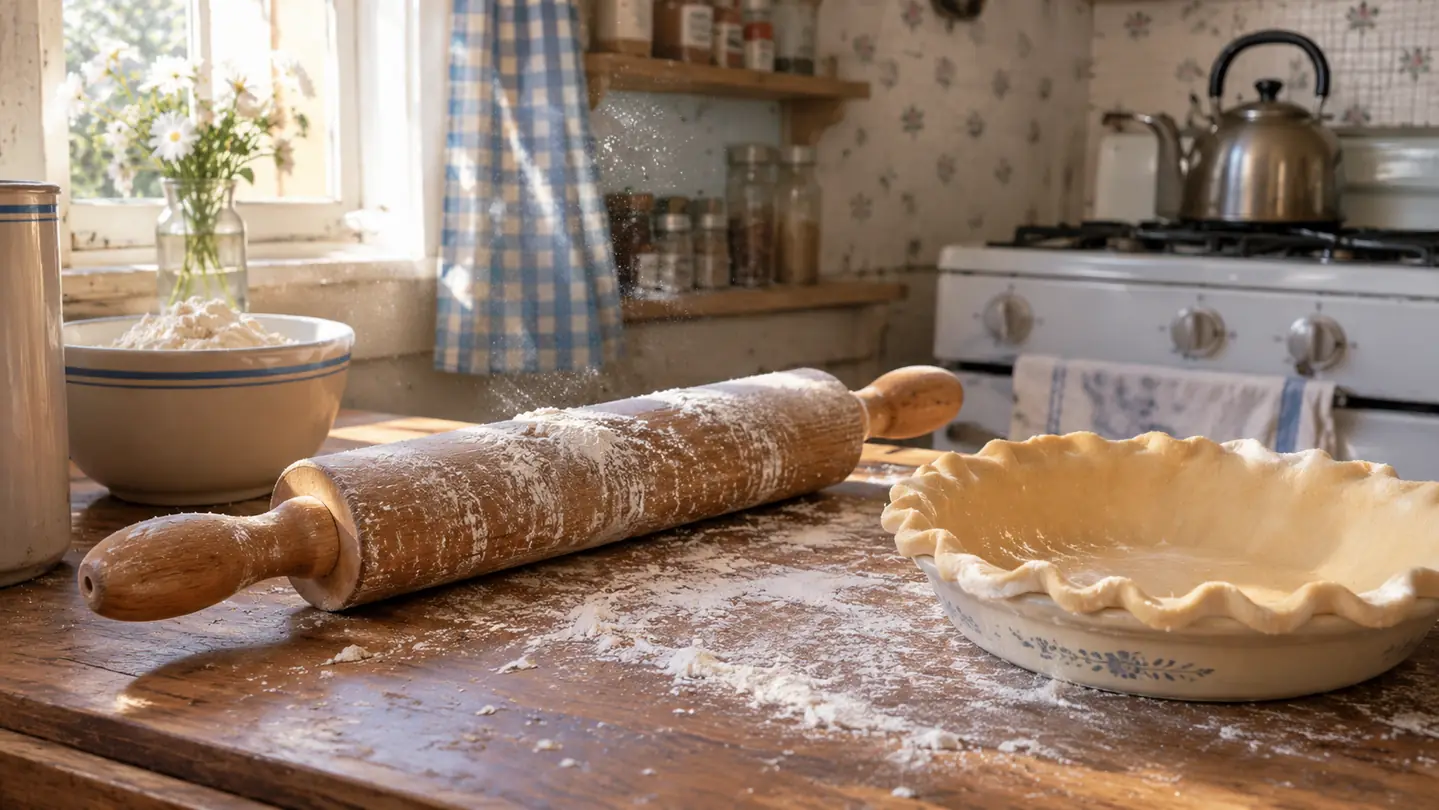
Short answer: for a week of ordinary baking, the Farberware Classic Wood Rolling Pin does nearly everything I ask of a pin. It weighs about a pound, it runs 17.5 inches long and 2.5 inches across, and it lives in the drawer under my silverware in a kitchen that does not have a spare inch. A marble pin is a real tool and it does two things better. It is not, however, the pin I would buy first.
I have baked in the same small 1950s Lancaster kitchen for over thirty years. Dale and I raised two kids here and the counter space has not grown since. So when a tool comes into this house it has to earn its footprint. A marble rolling pin is heavy, it wants a shelf, and it does one job exceptionally well and then sits there. The hardwood one gets picked up for pie crust on Sunday, cookies on a Wednesday, and pizza dough on a Friday when neither of us wants to cook. How often a thing gets reached for matters more to me than any single feature on the box. That is the whole argument in one sentence, and the rest of this is just showing the work.
| Farberware Classic Wood | Marble Rolling Pin | |
|---|---|---|
| Material | Moisture-resistant hardwood with a smooth, non-dragging rolling surface | Solid stone that holds the cold |
| Weight | About 1 pound, so it does not fight your wrist | Substantially heavier, and the mass presses for you |
| Reach | 17.5 inches long and 2.5 inches across, so a 9-inch crust takes a couple of passes | Usually shorter and thicker, which means more passes on a wide crust |
| Handles | Specially designed handles, balanced end to end | No separate handles, your hands ride the barrel |
| Cold retention | Sits at room temperature and warms as you work | Stays cold through a whole batch of laminated dough |
| Soft dough | Smooth surface, a light dusting of flour is usually enough | Cold face firms the dough you are trying to keep pliable |
| Cleanup | Wipe with a damp cloth and dry it, never soak it | Wipes clean, but you carry several pounds to the sink |
| Care over the years | Wants a rub of food-safe oil a few times a year | Nothing to maintain, but it can chip if it hits the floor |
| Storage | Lies flat in a drawer or stands in a crock by the stove | Needs a shelf and a careful hand lifting it down |
| Cost of entry | Modest | Higher, since you are paying for stone |
| Best for | Weekly pie crust, cookies, pizza and sandwich bread | Pastry and laminated dough in a warm kitchen |
Where Farberware Wins
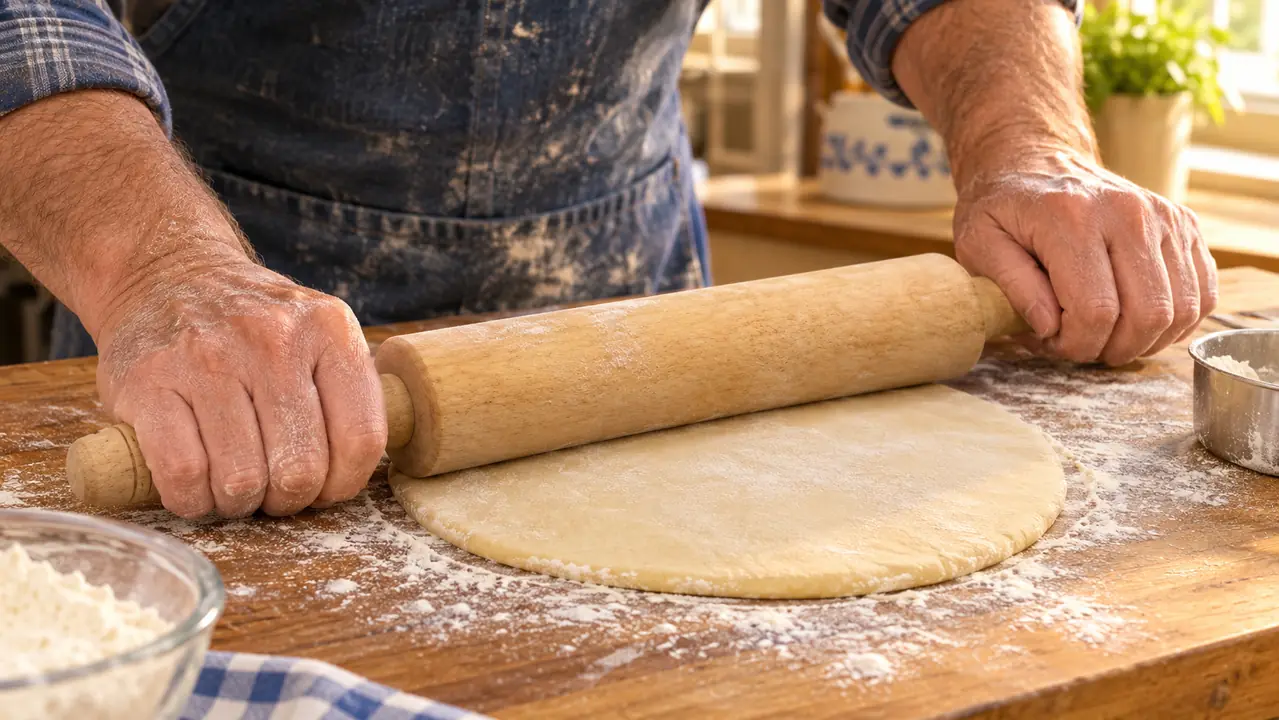
Reach is the first thing I notice. This pin is 17.5 inches long and 2.5 inches wide, so a nine-inch pie crust takes two passes and you are done. My marble pin is shorter and fatter, which means more passes, and every extra pass is another chance to warm the dough with your hands. On a Sunday morning with the gas oven already running hot, fewer passes is not a small thing.
The handles do more than the listing gives them credit for. They sit on the ends and the whole pin is balanced end to end, so it rolls evenly instead of wandering toward one side and leaving a thin edge on your crust. Dale spent thirty years as a machinist and notices balance the way other people notice a crooked picture frame. He picked this one up once, rolled it across the empty cutting board with no dough under it, and said it felt like it was made on purpose. The hardwood has a moisture-resistant finish and dough does not grab at it the way it grabs at a bare board.
The morning that settled it for me was the first Sunday in November, two days before the church bake sale. I had four disks of pie dough in the refrigerator, about five ounces each, resting since six in the morning. I set the plate on the counter, dusted the board with maybe a tablespoon of flour, and started in. Center out, quarter turn, center out. Two passes on each quarter and I had a round wide enough to drape over a nine-inch plate with an inch of overhang all the way around, still cool to the touch when I slid it into the pan. Four crusts, one dusting of flour, no patching at the edges. With the stone pin I would have been putting the dough back in the refrigerator between the third and the fourth, and I would have been patching a split on at least one of them. That is what I care about now: not which pin makes the better crust on the best day, but which one gets me through four of them on an ordinary one.
Where the Marble Rolling Pin Wins
Cold is the marble pin's case, and it is a good one. Pastry and laminated dough want the butter to stay firm, and a stone pin holds the cold from the refrigerator for a whole batch. Chill it for twenty minutes before you start and it is still cold when you fold the second turn. A friend of mine rolls croissant dough with one every December in a kitchen that runs warm no matter what she does, and she never has to put the dough back in the refrigerator mid-roll. A wooden pin sits at room temperature and warms as your hands work over it. If you make croissants or a fussy pie dough most weekends, that difference is real and you will feel it in the crumb.
The other honest advantage is that there is nothing to maintain. Marble does not need oiling, it does not take on the smell of last week's garlic bread, and it wipes clean in a few seconds. My wooden pin wants a rub of food-safe oil a few times a year, and it never, ever gets soaked. That is not a burden, but it is a chore, and if you are the sort of baker who wants a tool to ask nothing of you, stone is the answer.
The pin that earns its drawer space in a kitchen with no spare inches
Hardwood, 17.5 inches of reach, balanced end to end, and about a pound in the hand. It is the one I pick up for pie, cookies, pizza and bread, which is most of what a home oven actually bakes.
Amazon Check Today's Price on Amazon →The Weight Question
People assume the heavier pin is harder work. Sometimes it is the opposite. A stone pin with real mass does part of the pressing for you on a stiff dough, and you can lean into it without gripping hard. On a cold morning with a bowl of firm cookie dough straight out of the refrigerator, that genuinely helps, and I understand why bakers who work in big batches swear by it.
But weight cuts both ways, and it cuts at the end of the session. This Farberware pin is about a pound, and I can roll six pie crusts in a row without my wrists complaining. With the stone pin I notice it by the fourth. If your hands ache in cold weather, or if you bake for a church sale every fall like I do, a pound is the difference between finishing cheerfully and finishing sore.
I learned that the hard way two Octobers ago. I had promised four pies and six dozen cookies for the sale, which meant eight crusts and a long afternoon of rolling, and I did the first four with the stone pin because I thought the chill would help me on a warm day. By the fifth crust my right thumb was sore enough that I switched to the wood pin and finished the rest. The last four went faster and I did not have to stop and shake out my hand between them. Nothing about the finished pies was different. The tops looked the same, the filling set the same, and nobody at that sale could have told you which crust came off which pin. What changed was how I felt at four in the afternoon with the last one coming out of the oven.
My advice is to weigh the trade against what you actually bake. If you roll one crust a month, either pin is fine and the whole argument is academic. If you bake through a Saturday, the pound you save is worth more than the cold the stone gives you.
How Each Pin Handles a Soft Dough
Where the wood pin pulls ahead in daily use is soft dough. Cookie dough, sandwich bread, a loose pizza dough on a Friday night: these want a pin that does not stick and does not chill the surface it touches. The hardwood face is smooth enough that a light dusting of flour keeps things moving, and you are not fighting the dough back into a disk every thirty seconds.
The stone pin on the same dough is a different experience. Cold firms whatever it touches, which is exactly what you want for pastry and mildly annoying for a soft dough you are trying to keep pliable. I have rolled the same cookie dough with both, and the stone version needed a little more patience and a little more flour. It works. It is just working against you instead of with you.
Friday pizza is the clearest test I know. My dough is a wet one, and it comes out of the refrigerator a full hour before I want it so it can lose the chill. The wood pin takes it from a rough ball to a twelve-inch round in about six passes with a light dusting underneath, and the round stays round. The stone pin on the same dough wants more flour, and the more flour you work into the surface the more the crust tastes like flour instead of bread. I still got a usable round with it. I just had to move faster and lift the dough twice to keep it from sticking, and that kind of small friction is exactly what makes me not want to bother on a Friday when I am already tired.
A marble pin does two things better than mine. I still pick it up nine times out of ten, because mine is the one that fits the drawer.
What I Liked
- 17.5 inches of reach covers a nine-inch crust in two passes
- About a pound, so a long baking session does not wear out your wrists
- Handles on the ends and balanced end to end, so it rolls straight
- Smooth moisture-resistant hardwood that dough does not grab
- Lies flat in a drawer, which matters in a small kitchen
Where It Falls Short
- Warms to room temperature, so it adds no chill to pastry
- Wants occasional oiling and must never be soaked
- Will not give you the flaky lift a cold stone gives a laminated dough
Storage and Cleanup in a Small Kitchen
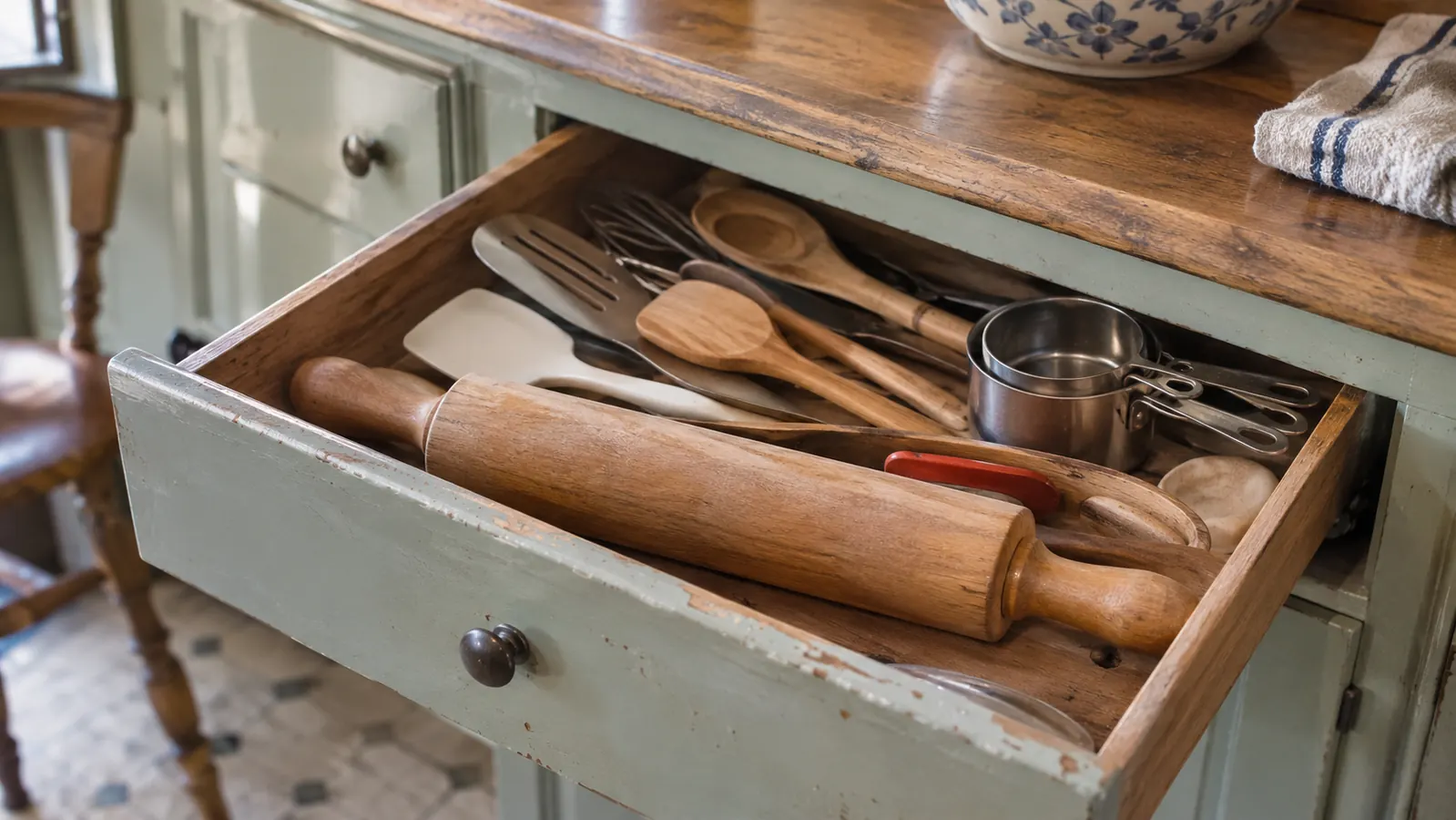
My kitchen has one drawer that fits baking tools and a narrow stretch of counter beside the oven. The wooden pin lies flat in that drawer, and when I am in the middle of a project I stand it in a crock by the stove. In thirty years of small kitchens it has never once been in the way. A stone pin wants a shelf and it wants you to be careful lifting it down. I have a scar on one toe from a cast iron skillet that taught me that lesson already.
Cleanup on the wood is a damp cloth, then dry it and put it away. No soaking, ever, which is true of any wood tool worth keeping. Marble wipes clean just as fast, but you are carrying several pounds to the sink and back, and in a small kitchen you handle everything twice. It is a small tax. Small taxes are what decide which tool you actually reach for.
The drawer under my silverware is eleven inches deep and about four inches high, and the pin lies across it on the diagonal with room left for the spatulas. That measurement is the entire reason it lives there and the stone one does not. For two years the marble pin lived on the top shelf of the pantry behind the cake stand, and I stopped using it mostly because getting it down was a two-hand job and I was usually holding a mixing bowl in the other hand. A tool you have to plan around is a tool you skip. If your kitchen is the size of mine, measure the drawer before you buy the pin, not after.
Who Should Buy Which
Buy the Farberware wood pin if you bake most weekends and want one tool that covers pie, cookies, pizza and bread. Buy it if your counter is small, if your wrists are not what they were, or if you want a pin you can leave in a drawer without thinking about it. It is also the better first pin, and the better second pin for anyone who cooks more than they pastry. At 17.5 inches with handles that keep your hands off the barrel, it does the everyday work without asking anything of you beyond an occasional wipe.
Buy a marble pin if pastry is the thing you care about most, if your kitchen runs warm in the summer, and if you have a shelf to keep it on. Some bakers keep both, and I understand the logic: stone for laminated dough, wood for everything else. But if I could only have one, and in this kitchen I nearly do, it would be the wood one. It is the tool that gets used, and a tool that gets used beats a tool that is better on paper.
Start with the pin you will actually reach for on a Tuesday night
Hardwood, balanced, about a pound, and it fits a drawer. The Farberware Classic has been in my kitchen for years and it still rolls a pie crust in two passes.
Amazon See It on Amazon →