
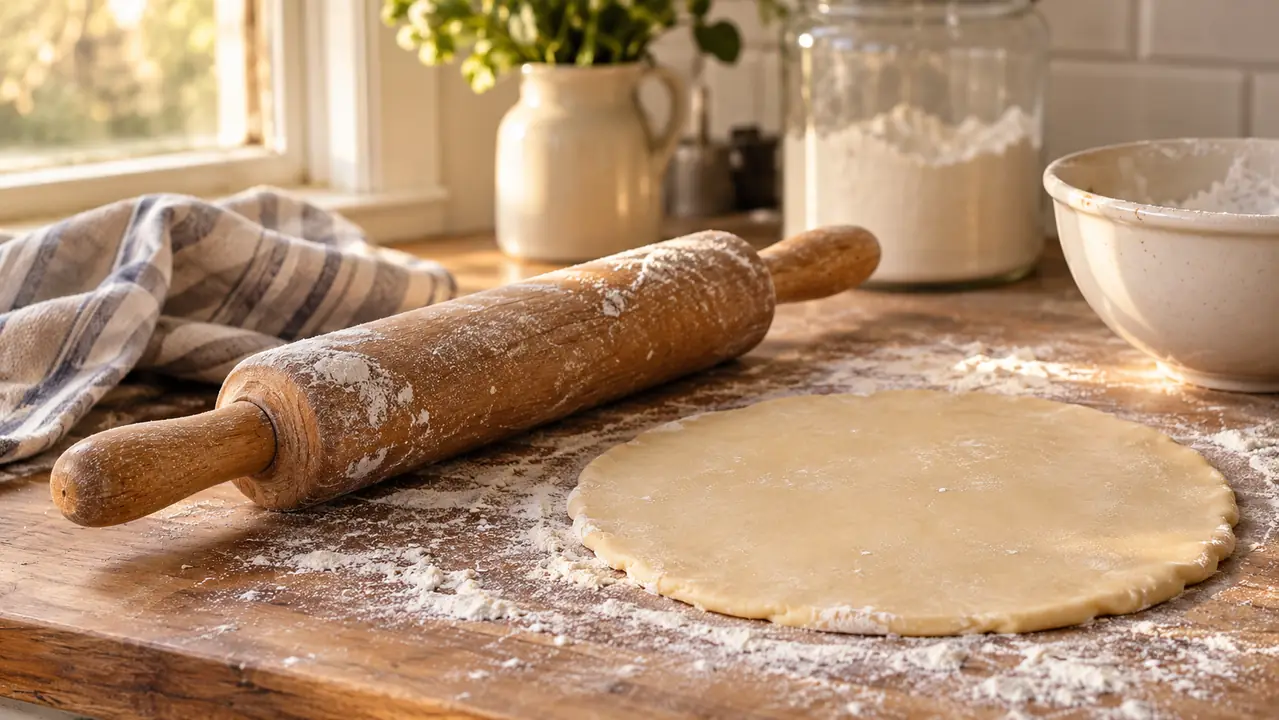
Farberware has been making kitchen tools for a very long time, and the Classic Wood Rolling Pin is about the plainest thing in the catalog. It is rosewood, 17.75 inches on the spec sheet even though the title calls it an 18-inch pin, one pound on the nose, with shaped handles at each end and a surface sanded smooth enough that dough does not grab at it. There is no bearing, no dial, no ring, nothing to adjust and nothing to tighten. If you came here hoping someone would talk you into spending more, this is not that review. This is the honest accounting of what a one-pound hardwood pin can do for you and what it quietly will not, written by somebody who has rolled pie crust on it most weekends since the week she brought it home.
I bake on Saturdays because that is when my kitchen belongs to me. My counter is the original 1950s laminate, about two feet of usable work space once the dish rack is sitting on it, and my gas oven runs a steady fifteen degrees hot, so I have learned to check everything early. A tool has to earn its footprint in a room that small. The short version of this review: the pin rolls thin pastry evenly, wipes clean in seconds, and has four specific situations where a heavier pin will beat it outright. Those four situations are the part most reviews leave off the page, and they are the reason this gets four stars from me and not five.
The Quick Verdict
A one-pound hardwood pin that rolls thin pastry evenly and asks almost nothing of you. Buy it if you want a plain tool that works. Skip it if you fight cold, stiff dough all afternoon or have grip trouble, because this pin will not do the pressing for you.
Amazon Check Today's Price →The plain pin that fits a small kitchen and rolls a crust flat without a fight
Farberware Classic Wood Rolling Pin. 17.75 inches, one pound, moisture-resistant rosewood, shaped handles balanced end to end. Nothing to assemble and nothing to break. It is the tool I reach for most Saturdays and the first one I would replace if it ever cracked.
Amazon Check Today's Price on Amazon →How I Have Actually Used It
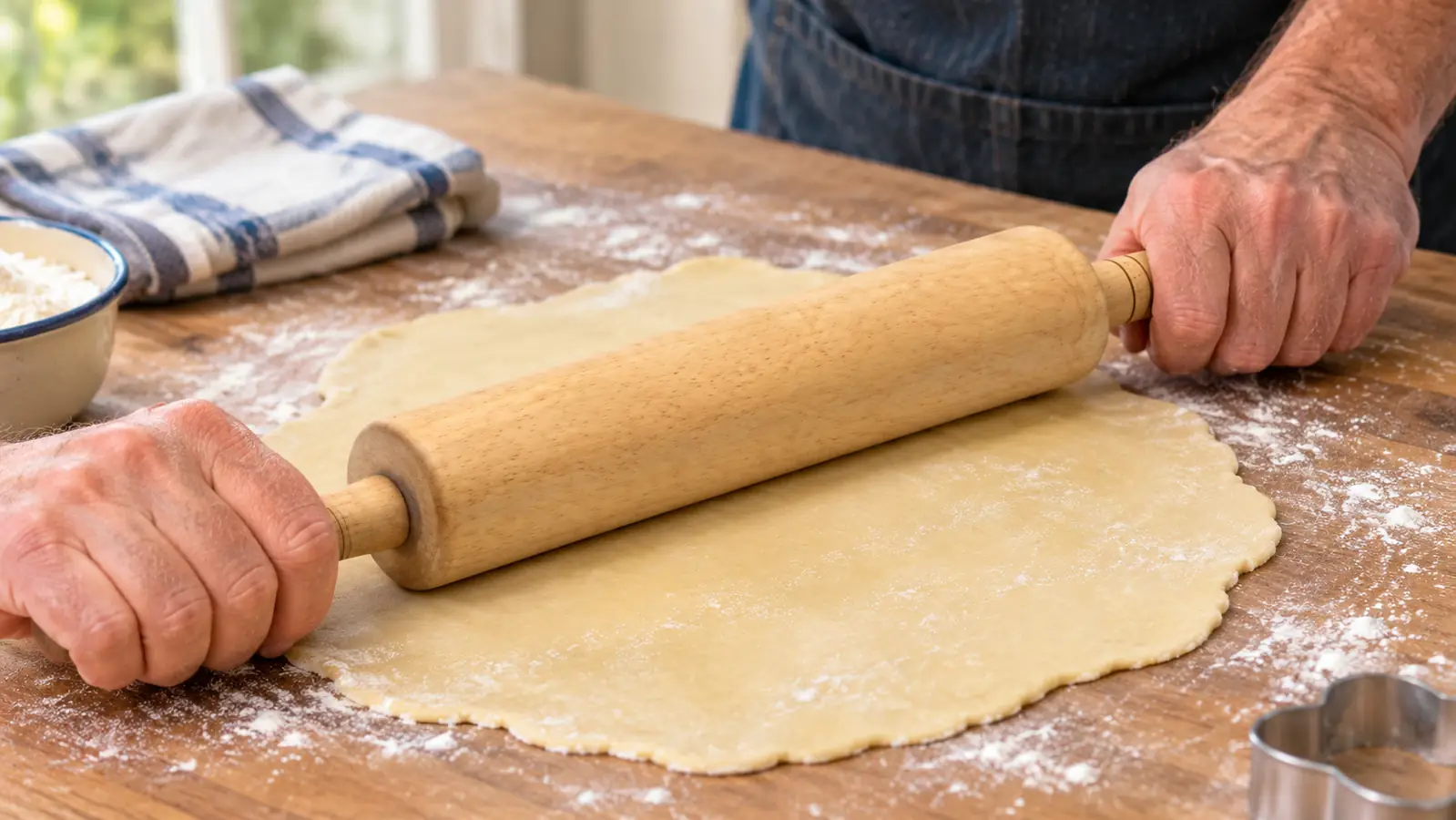
The first thing I rolled was a butter crust for an apple pie, and what I noticed was the release. The listing describes the surface as non-dragging, and that word is doing real work. The dough moves across the wood instead of fighting it. I still flour the pin, because wood is not non-stick and no wooden pin pretends to be, but I used noticeably less flour at the bench than I did with the pin this replaced. In pastry, less bench flour is the difference between a crust that stays tender and one that goes tough at the edges. That is not a claim I read anywhere. It is what Dale said at dinner, and he is honest to a fault about my baking.
Second came cutout cookies for the fall church bake sale, which is my least favorite job of the year because it means rolling a big batch in stages on a counter that is too small for the batch. The pin handled that about as well as anything could. Because it is light and nothing on it shifts or wobbles, I could roll, lift, turn the dough, and roll again without the pin skating off to the side. The pin I used for years developed a loose handle toward the end of its life, and that wobble is exactly what ruins the third and fourth passes on rolled dough. You do not notice it until you use a pin that does not do it.
Pizza dough was the third test and the one where this pin showed its limits. Dough straight from the refrigerator is stiff, and a one-pound pin does not press through stiff dough so much as ask you to press it through. I ended up letting the dough sit fifteen minutes longer than I usually would before rolling, and it behaved. With a heavier pin I would not have needed to wait. But I also would not have felt the dough firming under my hands, and that feel is how I know when to stop before I overwork it. The trade cuts in both directions, which is why I kept using this pin instead of moving it to the back of the drawer.
The Finish Does More of the Work Than You Think
Farberware describes the material as moisture-resistant hardwood, and rosewood in the material field. What that means at the bench is that the pin does not drink water the way a cheap unfinished pin does, so a surface you wiped stays a surface you wiped. I have rolled on mine roughly forty times now and the wood has not gone fuzzy or raised a grain the way a cutting board does when it gets careless treatment. That is not a promise that the finish is permanent. It is an account of how it has behaved in one kitchen over a few months of weekend use, which is the only thing I can honestly report.
What the finish does not do is replace technique. I want to be plain about this, because the copy on any rolling pin can make it sound as though the tool solves the rolling. It does not. Dough that is too warm will stick to this pin. Dough that is too cold will crack under it. If you have spent years blaming your pin for torn crusts, the pin may be part of the problem, but the better bet is that your butter was too soft or your kitchen was too warm. A decent tool removes one excuse from the list. It does not remove the list.
The one place the surface genuinely surprised me was laminated dough. I make a rough puff twice a year for a friend's birthday, and the layers will tear on a pin with any texture to it. This one is smooth enough that the sheet lifted clean when I rolled it onto parchment, and I did not have to patch a corner. I would not buy a pin for that reason alone. If you already make laminated pastry, though, you will notice the difference on the first fold and you will not have to be told about it.
I used less flour at the bench with this pin than with the one it replaced, and in pastry that is the difference between a tender crust and a tough one.
One Pound Is the Whole Trade-Off
One pound. That number decides whether you like this pin. A heavy pin does the pressing for you, so you guide it more than you push it. A one-pound pin works the other way around. You supply the pressure and the pin passes it along. On a sheet of cookie dough that difference is nothing at all. On the fourth consecutive roll of cold pie dough, with a sore shoulder and a bake sale on Saturday morning, it is everything.
I am sixty-one and my wrists are ordinary for my age, which is to say they complain by evening. I can roll two pie crusts with this pin without thinking about it. A third one and I notice the effort. That is not a flaw in the Farberware so much as an honest description of what one pound plus your own arm does over twenty minutes. If you deal with arthritis or grip trouble, a heavier pin, or one whose handles turn independently of the barrel, will be kinder to you. I would tell you that even on a page about this pin, because it is true.
The other half of the weight question is feedback. Because the pin is light, I can feel when the dough is thinning unevenly under it. A heavy pin flattens everything the same way, which is convenient right up until it is not. My first weeks with this one I over-rolled more than once, because I was pushing harder than the dough needed and the pin let me. Once I learned to let the first pass be almost nothing, just the pin's own weight and a light hand, and save my arm for the edges, the sheets came out even. That is a note about technique, not about the product, but it is the honest reason I kept reaching for it.
The Care Habit Nobody Mentions at Checkout
Here is the part the product page does not put in bold letters. A wooden pin has to be dried. Not scrubbed, not soaked, not left in the dish rack leaning against the plates. I wipe mine with a damp cloth, dry it immediately with a towel, and stand it on end for an hour before it goes back in the drawer. That is about thirty seconds of work, once a week in my kitchen. If thirty seconds a week is more than you want to give a kitchen tool, buy a marble pin or a stainless one and stop reading here, because the rest of this review will only annoy you.
I have not oiled mine yet. The wood has stayed smooth and closed, and the moisture-resistant claim has held up to the way I treat it. If the ends start to look dry, I will rub a little mineral oil on, let it sit overnight, and wipe off what does not soak in. That is the standard treatment for wooden kitchen tools and it has kept my boards alive for twenty years. None of this is complicated. It is a chore, and chores are the thing people quietly skip and then blame the wood for.
The other care note is odor. I keep a separate inexpensive pin for anything with garlic or heavy spice worked into it, and I keep this one for pastry, cookies, and bread. That is my habit rather than a warning printed by Farberware, and I am not going to dress it up as one. But wood takes on what it is used for, and a pin that rolls both savory and sweet doughs will eventually hand you a hint of last night's dinner in a sugar cookie. Two pins in a drawer is a small price for never having that conversation at a bake sale.
What Nobody Tells You Before You Buy
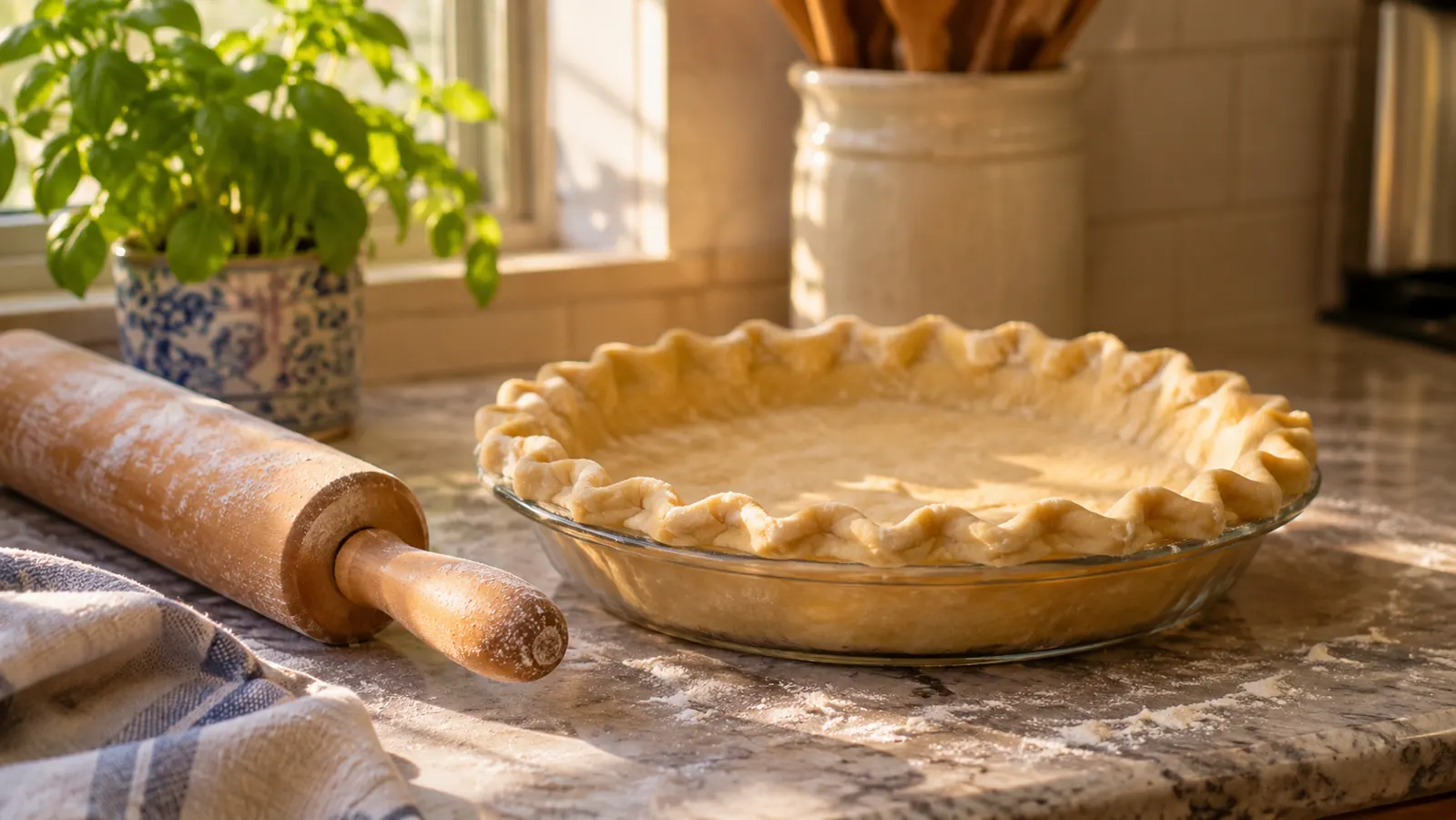
First, the size. The title says 18-inch. The spec sheet says 17.75 inches, and the item dimensions read 17.5 inches long by 2.5 inches wide. Half an inch does not change how a pin rolls. It does change whether the pin fits in the drawer you had in mind, so measure that drawer before you order if it runs shallow. Mine fits on the diagonal in the utensil drawer, and I will admit that was luck rather than planning on my part.
Second, there is nothing to adjust. Nothing on mine rattles or works loose, and I checked carefully, because the pin this one replaced developed a wobble at the handle after five years and I did not want to repeat that. What I watch for instead is a crack, which is what happens to any wooden tool that gets dropped on a tile floor or left wet. Treat this pin the way you treat a good wooden spoon and it will very likely outlast the recipe card you bought it for. Treat it like a frying pan and it will not, and that will not be the wood's fault.
Third, the ratings. A 4.7 average across more than twenty-two thousand ratings is a lot of agreement for a simple length of turned wood. Read the one and two star entries and you will find the same two complaints repeated: a pin that arrived rough, or a pin that split after a wet wash. Both are real. Neither is a mystery. If yours shows up with a raised grain, exchange it, because that is a bad unit and not a design flaw. If it splits after a soak in the sink, that is wood behaving like wood, and no pin survives that treatment whatever it is made of.
What I Liked
- Rolls thin pastry evenly and needs very little bench flour to keep the dough moving
- Light enough to steer with your fingertips, which means you can feel uneven thickness as it happens
- 17.75 inches and one pound, so it stores in a shallow drawer and comes out easily
- Wipes clean in seconds if you dry it right away
- A 4.7 average across more than twenty-two thousand ratings, which is hard to fake
Where It Falls Short
- You supply all the pressure, so cold stiff dough will wear your arm out
- The wood has to be dried after every use, and one careless soak can end it
- Not the pin for arthritic hands or long back-to-back rolling sessions
- I keep a second pin for savory and spiced doughs, which is one more thing to own
- The title says 18 inches while the spec sheet says 17.75, so measure your drawer first
Who This Is For
This is for the home baker who rolls a few times a month and wants one tool that behaves, without paying for machinery. If you make pie crust, cutout cookies, biscuit dough, or the occasional pizza, the Farberware does all of it well. It is also a good fit for a small kitchen, because at 17.75 inches and a pound it does not need a dedicated shelf or a hook on the wall. And it suits anyone who would rather learn to feel the dough than buy a pin that flattens it for them. That last group is smaller than the marketing suggests, but it is where I sit.
It also suits a beginner who is tired of guessing. One of the reasons I started weighing my flour and paying attention to my pans was that I spent years blaming myself for uneven results that came down to bad equipment and guessed measurements. A pin will not fix your butter temperature. But a pin that releases the dough cleanly removes one variable, and removing variables is how you get a crust that comes out the same way twice. That is the honest case for this tool. It is not exciting. It is just one less thing working against you on a Saturday morning.
Who Should Skip It
Skip it if your hands hurt. I mean that sincerely. If you have arthritis, or you have had wrist trouble, or you regularly roll out dough for a crowd, a heavier pin or one with handles that turn under your palms will save you real discomfort. This pin is light, and light means you do the work. I would rather you spend more on a tool that lets you keep baking than save a little and start dreading the rolling. If you want the longer account of how this one held up over months of use, that is a separate piece, and the same goes for the comparison against a marble pin.
Skip it too if you are hard on tools. If your wooden spoons live in the sink overnight and your boards have gone grey and warped, this pin will follow them. Wood rewards a small amount of attention and punishes neglect, and no amount of good reviews changes that. Buy a marble pin, or a stainless one, and be done with the worry. The Farberware is a good tool for someone who will dry it. It is the wrong tool for someone who will not, and pretending otherwise would make this a worse review than it is.
The pin that has rolled every crust in my kitchen since spring
If you want a plain hardwood pin that rolls thin dough flat, stores in a drawer, and asks only that you dry it afterward, this is the one on my counter. 17.75 inches, one pound, moisture-resistant rosewood, handles balanced end to end. Simple tools, used often, are the ones that earn their space.
Amazon Check Today's Price on Amazon →