
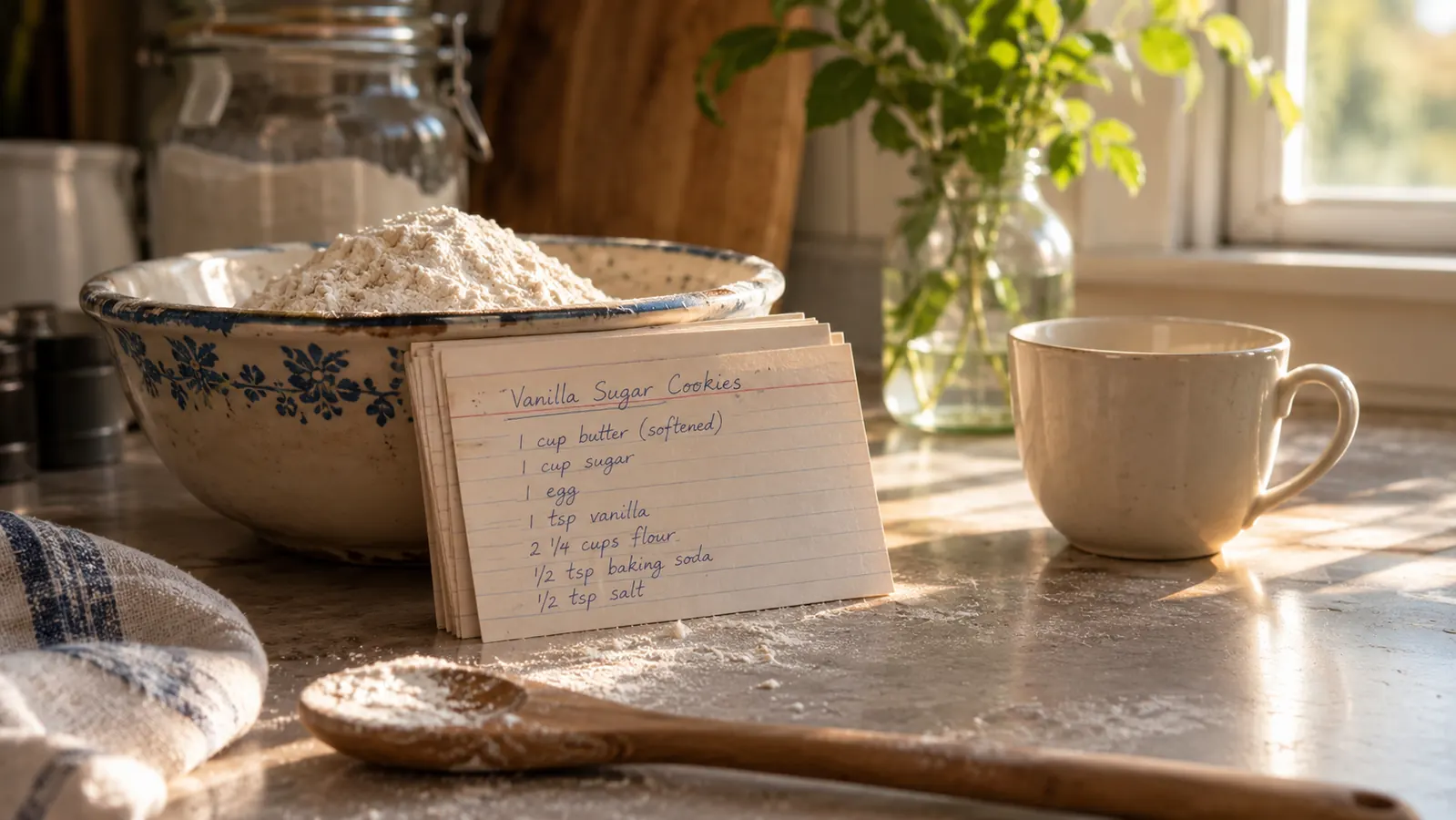
Monday's coffee cake came out heavy. Thursday's came out light, from the same card, in the same pan, with the same oven, in the same small kitchen. I spent a decade assuming the difference was me, some failure of technique I could not name and could not fix, and I baked that cake sixty times trying to find it. It was not me. It was the cup.
Nobody tells you that a cup of flour is not a fixed amount. Dip the cup into the bin and level it off and you can pack in 140 grams. Spoon the flour in light and you get 110. Across three cups that is a 90 gram swing, and 90 extra grams of flour turns a tender crumb into something closer to a brick. The fix is not a better recipe. It is a number instead of a guess, and the plainest way to get one is a small digital scale. Mine is an Etekcity, the 11 pound model, and it has not left my counter since I unboxed it.
One number on the counter beats ten guesses in a cup
The Etekcity weighs up to 11 pounds in 1 gram steps, tares to zero at the press of a button, and ships with two AAA batteries already inside it.
Amazon Check Today's Price on Amazon →Step 1: Weigh What One Level Cup of Your Flour Actually Weighs
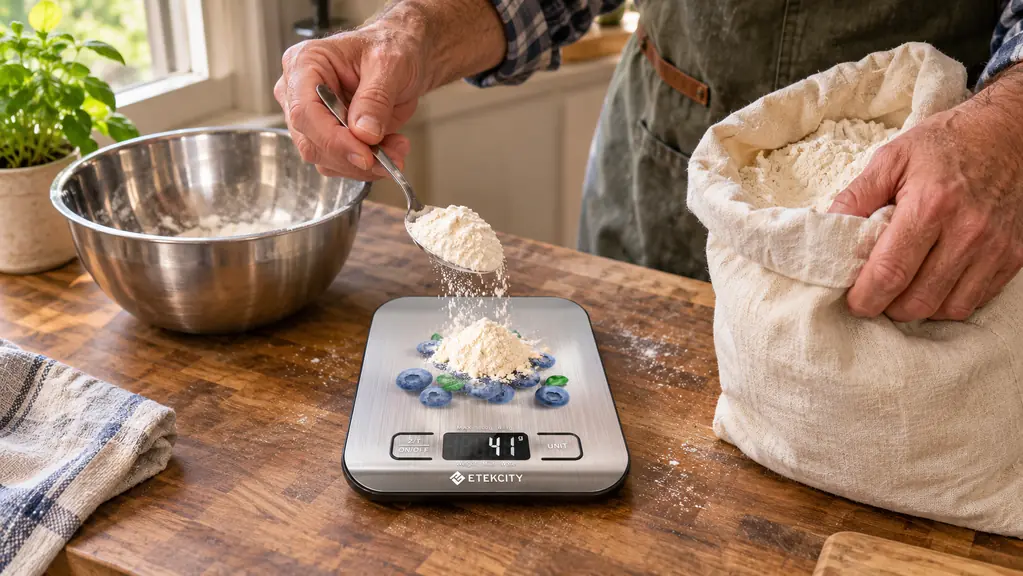
Start with the ingredient you use most, which is flour. Scoop it the way you normally scoop, level it with the back of a knife, and set the bowl on the platform. Write the number down. Do it again on a different day, then once more with the flour you keep in the pantry for the holidays, because flour settles as it sits and a bag that has been open since November scoops heavier than a fresh one. Three readings over three days will tell you more than one careful attempt on a Sunday afternoon.
Those three numbers will tell you what your hand actually does. If you land between 120 and 125 grams, you scoop the way test kitchens do. If you are closer to 145, you are a packer, and every recipe you have ever made from a book has been running dry, which explains a lot of cookies that spread too far and cakes that came out short. Neither habit is wrong. What matters is that you now know which one is yours, because that number is the only conversion factor that counts in your kitchen. Mine came in at 138, which surprised me and explains a great deal of tough pie crust.
Use the tare button while you are at it. It sits on the face of the scale, and pressing it with an empty bowl on the platform zeroes the display so you are weighing flour and not flour plus crockery. People forget it exists and then subtract bowl weight on a scrap of paper, which introduces a second error into a job you took on to remove the first one. Press it once, watch the display go back to zero, and carry on.
Step 2: Build a Conversion Sheet for the Ingredients You Actually Use
Now build a sheet. Not every flour sold in America. Yours. All purpose, bread flour if you keep it, the pastry flour you bought for one pie in 2019 and never opened again. Weigh a level cup of each, write the number next to the name, and tape the sheet inside a cabinet door where you will see it without having to think about it. This takes about twenty minutes and saves you a guess every weekend for the rest of your baking life.
The numbers are not interchangeable between ingredients, which surprises people the first time they do this. A cup of all purpose flour lands near 120 grams. A cup of granulated sugar lands near 200, because sugar crystals are dense and do not trap air the way flour does. Packed brown sugar can hit 215. Convert everything at 120 and you will bake a very sweet cake with a wet middle and spend the evening wondering what went wrong with a recipe you have made before.
Keep the sheet to one page and keep it honest. I have a card behind the flour bin with eleven entries on it and I have not needed a twelfth in two years. Every number on it came off the Etekcity in my own kitchen, which means the card accounts for my flour, my humidity, and the tall jar I have to reach into with a measuring cup because it will not fit under the shelf. Your card will look different from mine, and it should.
Step 3: Handle the Butter, Liquids, and Small Amounts That Do Not Convert the Same Way
Butter is the easy one and a good place to build some confidence. A stick is a quarter pound, which is 113 grams, and four sticks make the pound the old pound cake was named for. Cut it into the bowl and read the display, no softening and packing and scraping required. If a recipe calls for half a cup of butter and you weigh 113 grams instead, you have just removed one of the three places where that recipe could drift. Dale can tell the difference in a shortbread and he does not even know why.
Liquids are trickier because the scale will read them in grams or in milliliters, and those are not the same number for everything. Water is the simple case, since 1 milliliter weighs 1 gram, so a cup is 236 grams. Milk lands around 240. Oil is lighter than water and a cup comes in near 218, which is exactly why swapping oil for melted butter by volume in a quick bread changes the texture more than people expect. Weigh the oil and the swap stops being a guess. The scale reads in five units, so you can move between grams, ounces, pounds and ounces, fluid ounces, and milliliters without changing tools.
Small amounts are where a scale earns its keep. A teaspoon of table salt is about 6 grams, a teaspoon of baking powder about 4, a packet of yeast 7. Measuring a quarter teaspoon of cinnamon in a spoon is a guess made with a straight face. Measuring it on the platform is a fact. Set a small dish down, tare it, and add until the display reads the number you want, which is a habit that will make your spice cookies taste the same in December as they did in October.
My mother's coffee cake went from two good bakes out of three to eleven in a row. The only thing that changed was the flour number.
Step 4: Rewrite the Card So the Next Bake Is a Re-Run
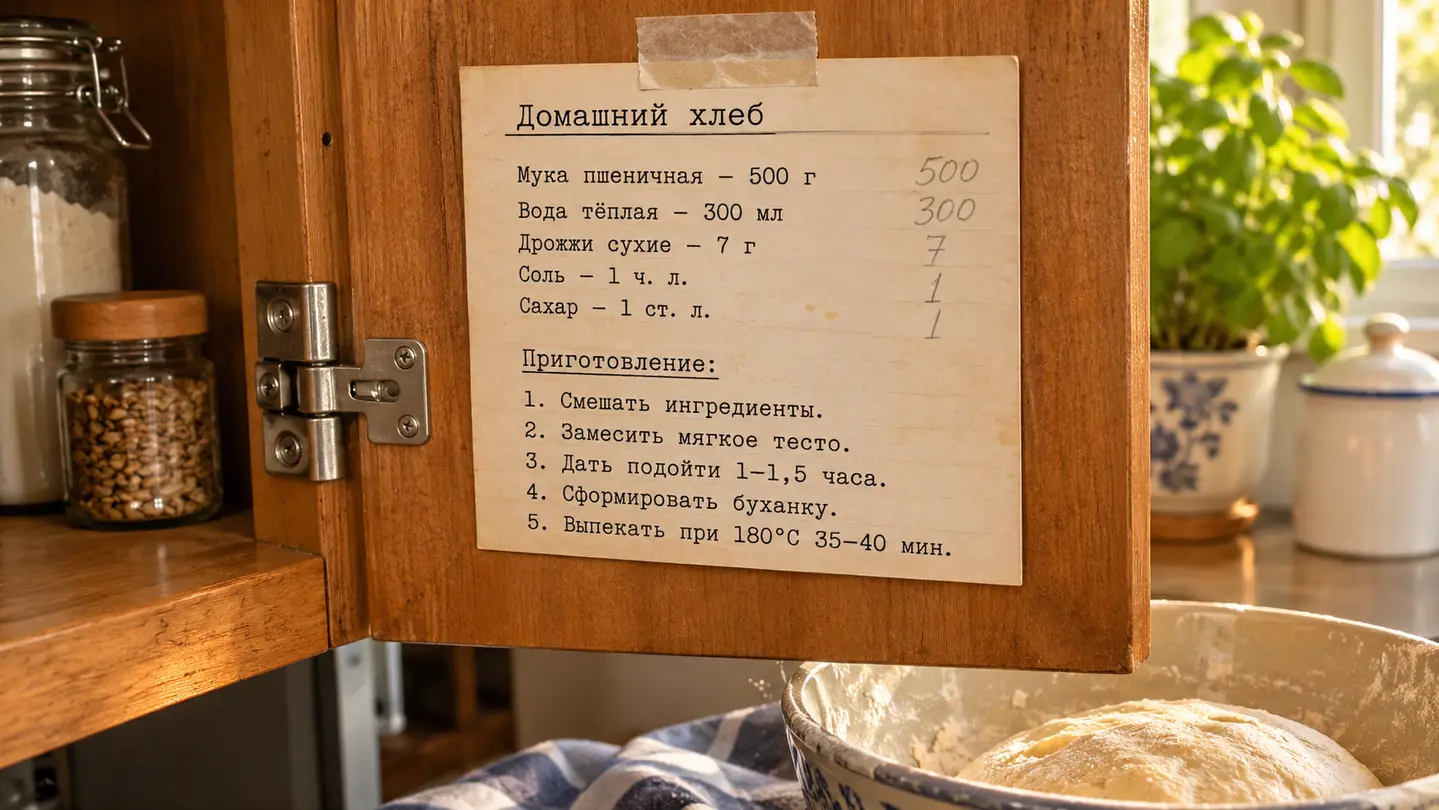
Take the card you love most and write the gram weights in pencil in the margin. Pencil, not pen. The first set of numbers is a hypothesis and the second bake is the test, and you will want to change at least one of them before you are finished. This is a two weekend project, not an afternoon one, and it is worth doing properly on the six recipes you make most rather than quickly on all thirty.
Rewrite the method while you are at it. Cream the butter and sugar becomes cream 113 grams of butter with 200 grams of sugar. Add the flour alternately with the milk becomes a sequence with a number attached to each addition, which is what the original meant all along. Old cards assume a cook who already knew the amounts by feel. That cook was my mother, and she was not me, and pretending otherwise cost me a decade of uneven cakes and one memorable fallen angel food.
Then put the original somewhere safe and do not laminate it, because pencil will not write on laminate. There is a particular comfort in a card with your mother's handwriting on it even after you have stopped cooking from it directly. Mine stays in the box with the rubber band around it. The working copy is typed, taped inside the cabinet door, and already has butter on it, which feels like the right outcome.
Step 5: Bake It Once and Adjust the Numbers, Not the Recipe
Bake the converted recipe once before you decide it is right. Weigh everything, follow the temperatures as written, and keep notes on the back of the sheet. My gas oven runs about fifteen degrees hot, which I know because there is a separate thermometer hanging from the rack, so I set the dial low and start checking early. Your oven has its own opinions and you should learn them the same way, because a converted recipe still cannot fix a chamber that runs 25 degrees off. The scale removes the measuring error. It does not remove the oven error, and you need both gone.
If the result is off, change the numbers and write down what you changed. A cake that comes out dry after the conversion probably needs 15 or 20 fewer grams of flour than your old scoop was delivering. A bread dough that will not come together may want a splash more water, because you are now weighing the flour accurately and the original recipe was written around a heavier cup. Both are adjustments to the sheet, not failures of the recipe, and neither one goes in the bin.
This is the part a scale actually changes, and it is smaller than the advertising suggests. It does not make you a pastry chef. It makes the recipe the same on a Tuesday as it was on a Thursday, which means that when something goes wrong you can find the cause instead of shrugging at it. Guessing hides the cause. Numbers expose it, and once you can see it you can fix it, usually with one small pencil edit to a card.
What Else Helps
A few small things speed the whole job up. A bowl that sits flat on the platform instead of rocking on its rim, which matters more than it sounds when you are adding flour a spoonful at a time and waiting for the number to land. A surface you can wipe down with a damp cloth, which the stainless steel top on this scale allows and a scratched plastic one does not. And the habit of writing the number down the first time, because you will not remember it in March and you will not want to weigh a cup of bread flour again just to find out.
Batteries matter more than people expect and cost less than a wasted bake. The Etekcity arrives with two AAA batteries already installed, and it shuts itself off when you leave it alone, which is why mine still reads correctly after months of weekend use. When the backlit display starts to dim, change the batteries before you blame the recipe. A scale reading low is a quiet problem, and quiet problems in baking turn into heavy coffee cake.
Storage deserves a thought if your counter is as short as mine. The scale is a mini form factor, about the footprint of a paperback, and it stands upright between the flour jar and the wall. I do not keep mine in a drawer, because a tool you have to unpack is a tool you skip. If you would rather have a pull out design, there is a side by side of this scale and the OXO Good Grips on the site, along with longer term notes on how this one has held up.
Give the card a number and it will behave the same way twice
The Etekcity holds up to 11 pounds, reads in 1 gram steps, tares with one button, and wipes clean with a damp cloth. Batteries are already in it.
Amazon Check Today's Price on Amazon →