
Six years ago I bought a loaf pan at the grocery store because I needed one that afternoon, and it has sat in my cupboard ever since, doing a passable job most weekends and a bad one at least twice a year. When I finally replaced it with the USA Pan loaf pan, I expected a revelation. What I got was quieter than that. The bread came out better, yes, but the improvement was less about the first loaf and more about what stopped going wrong by the tenth.
Here is the honest version of this review, because the glowing writeups tend to skip it. A pan is one variable. Your flour is a variable, your proof is a variable, and my gas oven runs about fifteen degrees hot, which I know because I keep a thermometer clipped to the middle rack and check it like a nervous substitute teacher. No pan fixes any of that. What a good pan does is stop adding problems of its own, and after thirty years of weekend baking I have come to believe that is worth paying for.
I bought it after a pumpkin loaf stuck to the old pan and came out in two pieces on the morning of the church bake sale, which is the sort of morning that makes a person reach for her purse. Dale, my husband, is a retired machinist and therefore has strong opinions about metal. He picked the new pan up, turned it over, tapped the bottom with one knuckle, and said it was the first sensible thing I had brought into that kitchen in years. He was judging the weight and the finish, not the bread. He was also right, which I told him later and in private.
The Quick Verdict
A stiff, evenly conducting pan that released every loaf cleanly once I stopped greasing it. Not a cure for rushed dough, and the nonstick is a coating with a working life, not a permanent surface.
Amazon Check Today's Price →If sandwich bread is a weekly habit, this is the pan I would hand you
Aluminized steel, a 1.5 pound capacity, rated to 450 °F, and released every loaf I baked once I stopped greasing out of habit. Check the current price before you decide.
Amazon Check Today's Price on Amazon →How I've Used It
I bake most weekends and the lineup does not change much: a sandwich loaf Saturday morning, cookies if Dale has been hinting, a pie when the apples are good, layer cakes for birthdays, and quick breads whenever the bunch of bananas on the counter goes past its prime. The loaf pan earns its place on the sandwich bread and on the pumpkin bread I make in October for the church bake sale. Everything else in my kitchen has a job and this one has two, which is more than most of my bakeware can claim.
The pan measures 10 by 5 by 3 inches and weighs 1.3 pounds, which matters in a kitchen with about two feet of usable counter. It is heavier than the grocery store pan and I notice that when I lift a full one out of the oven, not when it is empty. The capacity is listed at 1.5 pounds, or 4 cups, and it takes my standard sandwich dough with room to spare, so the loaf rises up rather than spilling out over the rim.
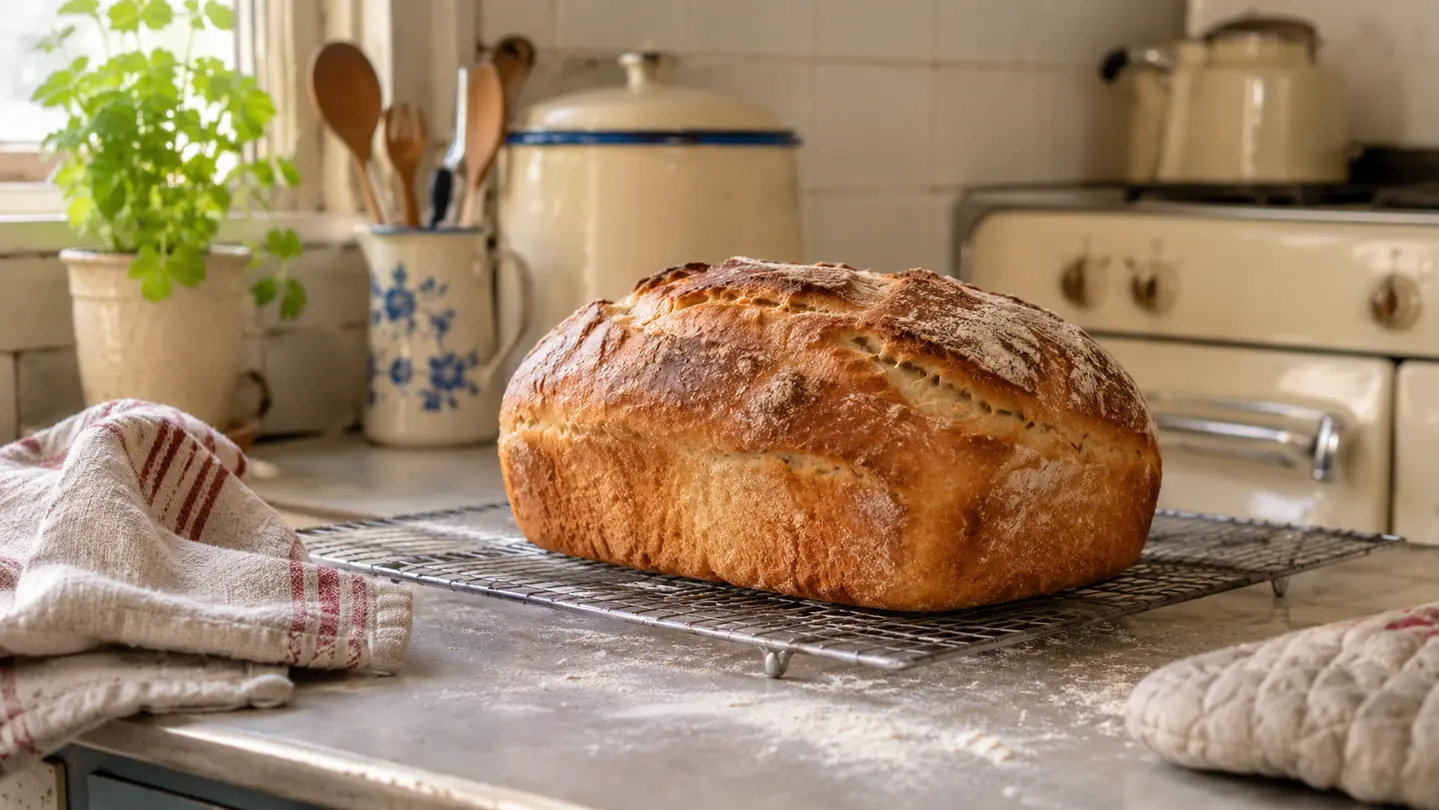
For the first month I baked the same recipe two ways, one loaf in the new pan and one in the old, side by side on the same rack so the oven's hot corner hit both of them equally. That is not a laboratory. It is one woman with a scale and a notebook. But it told me what I wanted to know. The crust on the USA Pan loaf came out even across the top and down both sides, and the old pan's loaf had a pale patch at one end where the metal ran cooler.
What the Five-Star Reviews Leave Out
Most reviews are written in the first three weeks, and most of them are about bread, because bread is what the pan is for. What they do not tell you is that the surface changes. Mine is a year old and the baking face has darkened, which is normal for a coated steel pan and not a defect. It has not changed how the bread releases. It has changed how the pan looks, and I notice because I am the sort of person who reads reviews before buying a spatula.
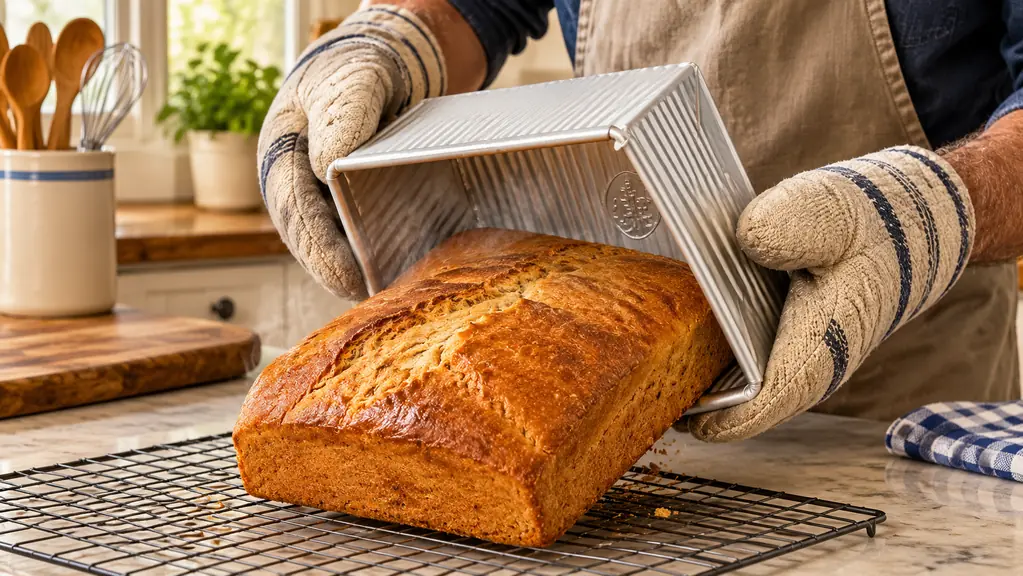
They also do not talk about lifting it. The rim is where you grip, and I take it out of the oven with both hands and a pair of mitts. With a full 1.5 pound loaf inside, one hand would not be enough for me anyway, but if you are used to a pan with a lip on one end you will spend a week reaching for something that is not there.
And they rarely tell you the thing I most want to tell you, which is that the pan will not rescue a loaf that was underproofed. My first bake in it was a disappointment. The bread domed, then sank at one corner, and I blamed the pan for about an hour before admitting that I had rushed the second rise because I wanted to use the new thing. The pan did exactly what it was supposed to do with dough that was not ready for the oven.
My first loaf in this pan sank at one corner. The pan was fine. I had rushed the second rise because I wanted to use the new thing.
The Corrugated Surface, Without the Marketing Language
The listing describes a corrugated surface that improves air circulation, and I was skeptical in the way I am skeptical of most claims printed on packaging. What I can tell you is what I see. The bottom and the sides have shallow ridges running one direction, and they do two things I can actually verify. They give the rising loaf something to grip as it climbs, and they leave faint lines on the crust that I have come to like.
The other thing the ridges seem to do is keep the baking face from sitting dead flat against the oven rack. I bake the pan on the middle rack with nothing beneath it, and the bottom of the loaf comes out the same color as the top, which was never true of the old pan. That is the whole of my evidence. I cannot prove air circulation. I can tell you the bottoms are even, and after years of pale-bottomed loaves that is the part I care about.
Aluminized steel is the material, described in the listing as steel for strength with aluminum for conductivity, and that matches the feel. The pan is stiff. It does not flex at the corners the way the thin one does, and it has not warped going from a hot oven to a cool counter. It is rated to 450 °F. Nothing I bake goes past 425, so that rating is headroom rather than a limit I test, but it is worth knowing before you buy.
The Coating Has a Working Life
The nonstick is a silicone coating, and the listing is straightforward about the fact that it is a coating, which means it is a layer and layers wear. Nothing in my year with this pan suggests it is failing. But I have thrown out enough coated pans to know that the day will come, and I would rather say so than pretend otherwise. That is the tradeoff you accept for the release you get in the meantime.
Two habits I think are helping. I wash it by hand, because the care instructions say hand wash and I am not going to argue with a pan that works. And I stopped greasing it. The first three loaves I greased out of pure habit, the way I had with every pan before this one, and the crust came out with a slightly fried texture I did not want. Once I stopped, the bread released on its own and the crust was better. If you are coming from a glass pan, that will feel wrong for a while.
I use a wooden spoon and a silicone spatula in it, and I do not cut in the pan. I do not soak it either, because soaking is what killed the last one. Five minutes in warm water with a dishcloth, a rinse, and back into the cupboard dry. There is a limited lifetime warranty and I have not needed to test it, and I would just as soon never find out how that process works.
The Things I Got Wrong
A review that only lists the pan's faults is not really honest, it is just balanced looking. So here are my mistakes. Mistake one was greasing, which I have already confessed to. Mistake two was cutting the first loaf while it was still warm, which is not the pan's problem either, but it did make me think for a day that the crumb was gummy when it was only steam.
Mistake three was assuming a heavier pan would bake faster. It bakes more evenly, which is not the same thing. The first loaf needed the full time in the recipe rather than the five minutes less I had been shaving off for years to compensate for a hot oven. I had been adjusting times for so long that I had stopped reading what the recipe actually said. The new pan made me go back and read it, which was humbling and also useful.
None of that is a reason to avoid it. All of it is a reason to expect a week or two of recalibration, the way you recalibrate when you finally buy a scale and discover your cups of flour were never the same twice. A better tool does not make you better at the thing. It makes your mistakes legible, which is the next best outcome and honestly the more useful one.
What I Liked
- Even browning across the bottom and sides, which the thin grocery store pan never managed
- Released every loaf cleanly once I stopped greasing it out of habit
- Stiff aluminized steel that does not flex at the corners or warp at everyday oven temperatures
- The 1.5 pound, 4 cup capacity takes a standard sandwich dough with room to rise
- Rated to 450 °F and covered by a limited lifetime warranty
Where It Falls Short
- Hand wash only, which is a real change if you are used to the dishwasher
- Heavier than a bargain pan and awkward to lift one handed with a full loaf
- The coated surface darkens with use, even though it keeps working
- The nonstick is a layer that will eventually wear, not a permanent surface
- Costs more than the grocery store pan, and it will not fix dough that was rushed
The 1.5 Pound Capacity and My Small Counter
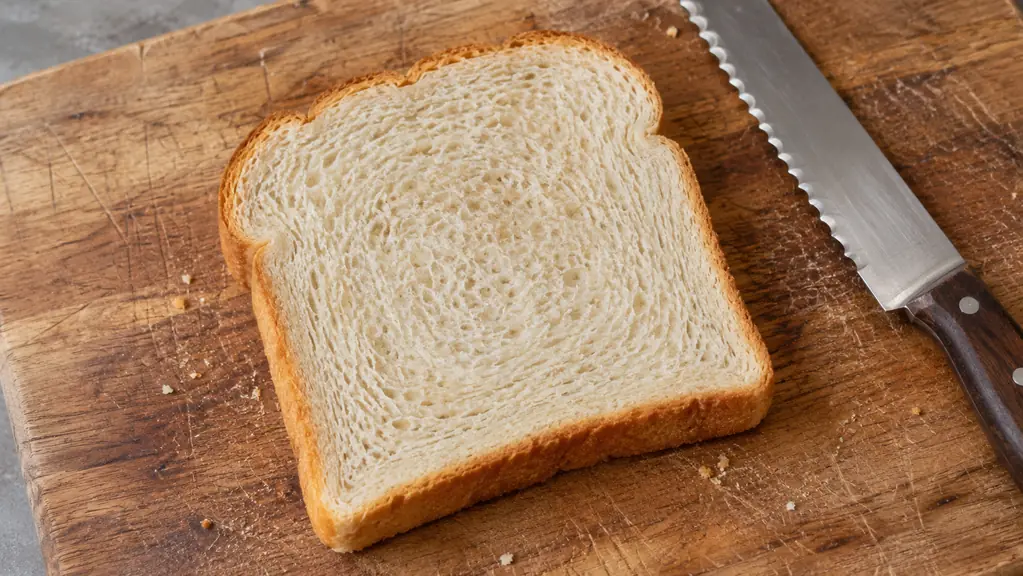
My kitchen is small and counter space is the thing I ration. The pan is 10 inches long, not much bigger than the old one, and it nests in the cupboard with the sheet pans. The depth is what I notice. Three inches of side wall means a taller loaf, and a taller loaf means sandwiches that hold together and toast that fits in the slots without being squashed in.
If you bake for two people, one loaf at 1.5 pounds is most of a week's bread, sliced and frozen in portions. If you bake for a crowd, you will want two pans and you will want them the same, because two loaves in two different pans gives you two different breads and one of them will be worse. I have one. I am considering a second, which is the most honest thing I can tell you about a piece of bakeware.
Cleaning it takes less time than I expected. The corners are square enough that a dishcloth gets into them, and nothing has baked on hard enough to need scraping. The tradeoff is that you cannot leave it in the sink overnight, and in a small kitchen things get left in the sink overnight. That is the one habit this pan has actually changed.
The Glass Pan Question
Most people asking about this pan already own a glass loaf pan, and I did too, back before I broke it. Glass conducts heat slowly and holds it, which gives you a darker crust on the bottom and a longer bake overall. The steel here conducts quickly and evenly and the loaf comes out paler on the bottom than a glass pan would give you, which some bakers prefer and some do not. Neither is wrong. They are different tools that make different bread.
The practical difference for me is release. Glass, in my experience, is either greased thoroughly or it is a coin flip. This pan is not a coin flip. If you are happy with your glass pan and your bread comes out the way you like it, you do not need to spend anything. If your glass pan is the reason you dread the last ten minutes of a bake, that is a different conversation.
Who This Is For
This is for the person who bakes sandwich bread or quick bread most weekends and has been making do with a thin pan that browns unevenly. It is for someone who does not mind washing a pan by hand and would rather buy one good one than three cheap ones. If you want the same loaf every Saturday, the repeatability is the entire point, and repeatability is what the stiff, even-baking metal gives you. USA Pan has earned the spot in my cupboard, and I say that as someone who is not easily impressed by cookware.
Who Should Skip It
Skip it if the loaf pan only comes out twice a year, because a coated pan that sits in a cupboard for months does not improve with age and a cheap one will do the same job on that schedule. Skip it if the dishwasher is non-negotiable in your house. Skip it if you are still working out your dough, because the pan will not tell you what went wrong and you will be spending money on bakeware when the fix is a longer second rise. And skip it if you bake past 450 °F, because the rating is the rating.
One pan, hand washed, that stops adding problems of its own
Aluminized steel with a corrugated surface, rated to 450 °F, and backed by a limited lifetime warranty. If your bread has been inconsistent and you have already checked your proof, this is the next variable to rule out.
Amazon Check Today's Price on Amazon →